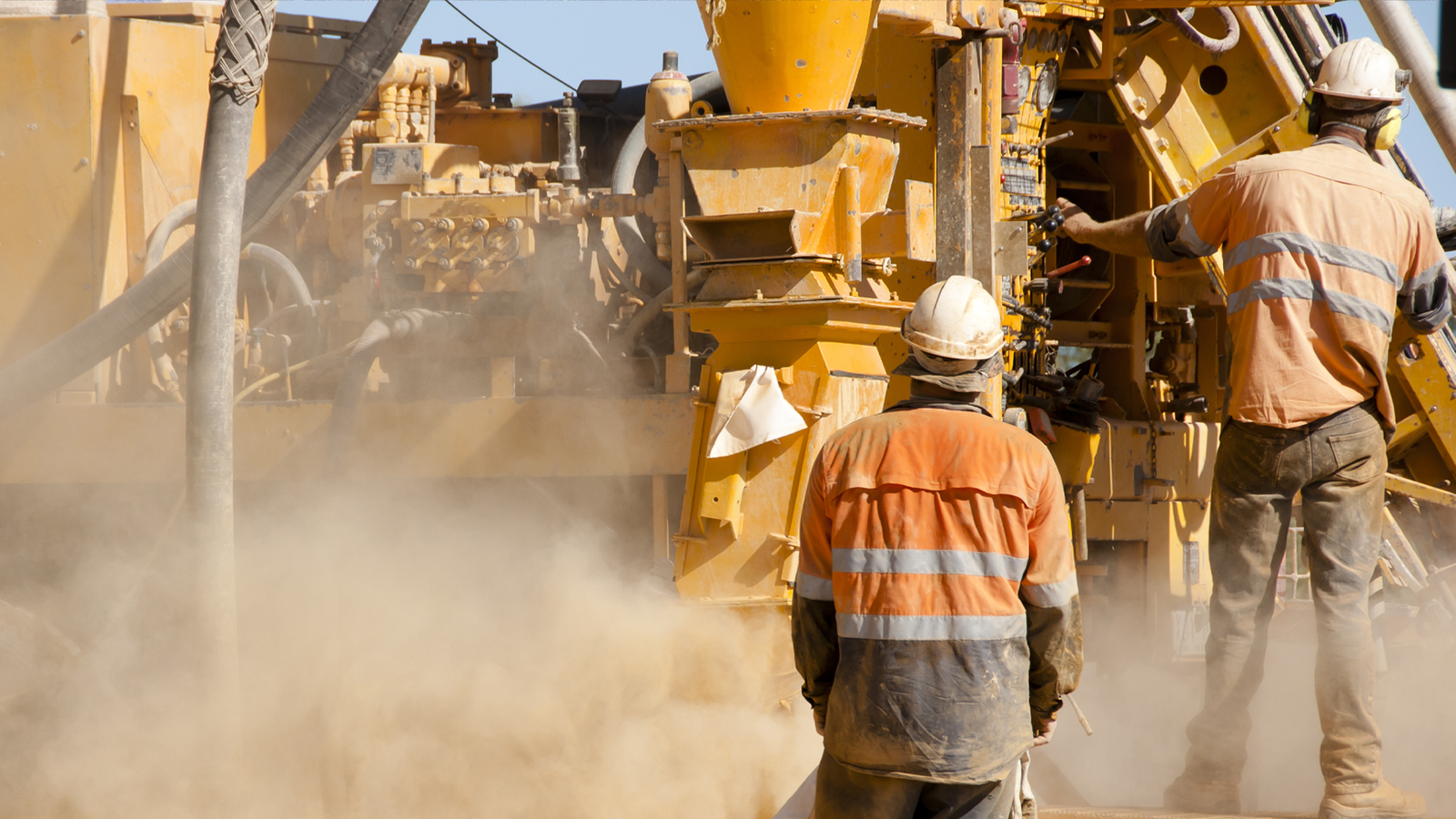
Mineral exploration is the most critical stage in the life cycle of any mining project. It forms the foundation for every major decision that follows, from evaluating economic feasibility to mine development and commercial production. However, global statistics indicate that a significant percentage of exploration projects never become producing mines – not only because economically viable mineral deposits are absent, but also due to technical and managerial mistakes that could have been avoided.
Despite remarkable advancements in remote sensing technologies, Geographic Information Systems (GIS), artificial intelligence, and modern geophysical surveying techniques, human error and poor planning remain among the leading causes of unsuccessful exploration programs.
This article highlights the most common mistakes in mineral exploration programs and provides practical recommendations to help companies, geologists, investors, and mining professionals improve exploration efficiency, reduce risks, and maximize the chances of discovering economically viable mineral resources.
1. Starting a Mineral Exploration Program Without a Clear Geological Model
One of the most common mistakes is initiating exploration activities before developing a comprehensive geological model of the target area.
Exploration should never be a random process. Instead, it must be based on a thorough understanding of the area’s geology, including rock types, geological structures, alteration zones, mineralization styles, and the geological processes responsible for ore formation.
Without a well-defined geological model, exploration targets become speculative, increasing the likelihood of wasting both time and financial resources.
How to Avoid This Mistake
. Review all available historical geological reports and exploration data.
. Conduct detailed geological mapping before drilling begins.
. Develop a preliminary geological model and continuously update it as new information becomes available.
. Integrate field observations with laboratory results throughout the exploration campaign.
2. Relying on a Single Exploration Indicator
Many inexperienced explorers assume that the presence of quartz veins or a single high-grade gold sample automatically indicates an economic gold deposit.
In reality, no single geological indicator is sufficient to confirm the existence of an economically mineable resource.
Successful exploration relies on integrating multiple datasets, including:
. Geological mapping
. Geochemical surveys
. Geophysical investigations
. Structural geology
. Drilling data
. Petrographic and mineralogical studies
Each dataset complements the others, and relying on only one can easily lead to incorrect conclusions.
3. Poorly Designed Drilling Programs
Drilling represents one of the most expensive components of any exploration campaign. Consequently, mistakes made during drill program design can result in substantial financial losses.
Common drilling mistakes include:
. Incorrect drill-hole orientation
. Excessive spacing between drill holes
. Inadequate drilling depth
. Failure to intersect the ore body at the optimal angle
. Ignoring geological structures that control mineralization
These issues often produce misleading data, potentially causing companies to overlook valuable deposits or significantly overestimate mineral resources.
Best Practice
Drill planning should always be based on the geological model rather than assumptions or convenience.
Every drill hole should answer a specific geological question.
4. Poor Sampling Practices
Within the mining industry, there is a well-known saying:
“A poor sample leads to a poor decision.”
Even the world’s most advanced analytical laboratories cannot compensate for poor-quality sampling.
Common sampling errors include:
. Sample contamination
. Mixing samples
. Incorrect labeling
. Improper storage
. Inadequate cleaning of drilling equipment
. Sample loss during transportation
Since exploration decisions depend entirely on sample quality, strict sampling protocols must be implemented from the beginning of every project.
5. Neglecting Quality Assurance and Quality Control (QA/QC)
Quality Assurance and Quality Control (QA/QC) are not optional-they are essential components of any professional exploration program.
An effective QA/QC program typically includes:
. Certified Reference Materials (Standards)
. Blank Samples
. Duplicate Samples
. Laboratory Check Assays
These procedures help detect contamination, analytical errors, and inconsistencies before exploration decisions are made.
Companies that fail to implement QA/QC risk basing million-dollar investments on unreliable analytical data.
6. Misinterpreting Geophysical Data
One of the most common misconceptions among non-specialists is that geophysical surveys can detect gold directly. In reality, geophysical methods measure the physical properties of rocks rather than the metals themselves.
Depending on the technique used, surveys measure properties such as:
. Electrical resistivity
. Chargeability (Induced Polarization – IP)
. Magnetic susceptibility
. Density
. Electromagnetic conductivity
As a result, geophysical anomalies do not necessarily indicate the presence of mineralization. They may simply reflect changes in rock type, alteration, groundwater, or geological structures.
How to Avoid This Mistake
Geophysical results should always be interpreted by experienced geophysicists and integrated with geological mapping, geochemical data, and drilling information before defining exploration targets.
7. Ignoring Structural Geology
In many mineral deposits, faults, shear zones, fractures, folds, and structural intersections control the distribution of mineralization.
Ignoring structural geology may lead to drilling in the wrong locations or missing the ore body entirely.
Understanding the structural framework is therefore essential for targeting mineralized zones accurately and improving drilling success rates.
8. Making Premature Decisions
Another costly mistake is abandoning an exploration project after the first unsuccessful drilling campaign.
Many world-class mineral deposits required several exploration phases before the economic ore body was discovered.
Negative drilling results do not always indicate the absence of mineralization. They may simply reflect poor targeting or insufficient geological understanding.
Before terminating a project, exploration teams should carefully review all available geological, geochemical, and geophysical evidence.
9. Failing to Perform Statistical Analysis
Analytical results should never be evaluated individually.
Statistical analysis helps identify:
. Geochemical trends
. Background values
. Anomalies
. Outliers
. Relationships between different elements
. Spatial distribution patterns
Applying statistical methods allows exploration teams to prioritize targets more effectively and reduce uncertainty during decision-making.
10. Poor Data Management
Modern exploration projects generate enormous volumes of information, including:
. Drill-hole databases
. Geological logs
. Assay certificates
. Geophysical datasets
. GIS layers
. Survey coordinates
. Photographs
. Core images
Without an organized database management system, valuable information can easily be lost or duplicated, reducing the reliability of future resource estimation.
Professional exploration companies rely on centralized digital databases integrated with GIS and 3D geological modeling software to maintain data quality and accessibility.
11. Focusing Only on Gold While Ignoring Associated Minerals
Many exploration programs focus exclusively on gold assays while overlooking valuable associated elements such as:
. Silver
. Copper
. Zinc
. Lead
. Molybdenum
In some deposits, these by-products significantly improve the project’s economic viability.
A comprehensive analytical program ensures that no potentially valuable mineralization is overlooked.
12. Ignoring Economic Considerations
Discovering mineralization does not automatically guarantee a profitable mining operation.
Several economic factors determine whether a deposit can be mined successfully, including:
. Ore grade
. Deposit size
. Mining depth
. Metallurgical recovery
Infrastructure availability
. Processing costs
. Commodity prices
Economic evaluation should begin during the exploration stage rather than after resource definition.
13. Poor Communication Between Disciplines
Successful mineral exploration requires close collaboration among:
. Geologists
. Geophysicists
. Geochemists
. Mining engineers
. GIS specialists
. Database managers
. Environmental professionals
. Health and Safety personnel
Poor communication often results in duplicated work, conflicting interpretations, and inefficient exploration strategies.
Integrated multidisciplinary teams consistently achieve better exploration outcomes.
14. Neglecting Health, Safety, and Environmental Practices
Technical success should never come at the expense of safety.
Exploration activities often take place in remote areas where risks include difficult terrain, heavy equipment, wildlife, and extreme weather conditions.
A strong Health, Safety, and Environment (HSE) culture protects employees, minimizes operational interruptions, and improves project performance.
15. Failing to Utilize Modern Technologies
The mining industry is undergoing a technological transformation.
Today’s most successful exploration companies increasingly rely on:
. Artificial Intelligence (AI)
. Machine Learning
. Drone Surveys
. High-resolution Satellite Imagery
. Geographic Information Systems (GIS)
. Remote Sensing
. 3D Geological Modeling
. Cloud-based Data Management
While these technologies do not replace geological expertise, they significantly improve targeting accuracy, reduce exploration costs, and accelerate decision-making.
How to Build a Successful Mineral Exploration Program
An effective exploration program should include the following key principles:
. Define clear exploration objectives.
. Develop a robust geological model.
. Integrate geological, geochemical, and geophysical datasets.
. Design drilling programs based on geological evidence.
. Implement strict QA/QC procedures.
. Maintain high-quality data management systems.
. Continuously review and update exploration models.
. Adopt modern exploration technologies.
. Promote collaboration among multidisciplinary teams.
. Consider economic feasibility from the earliest stages.
Building More Successful Mineral Exploration Programs
Mineral exploration is far more than collecting rock samples or drilling holes. It is a systematic scientific process that requires careful planning, accurate data collection, sound interpretation, and informed decision-making.
Many exploration projects that are ultimately labeled as failures did not fail because mineral resources were absent. Instead, they failed due to preventable mistakes such as inadequate planning, poor sampling, weak quality control, ineffective data management, and insufficient integration of geological information.
Investing in a well-designed exploration program not only increases the likelihood of discovering economically viable mineral deposits but also minimizes financial risks, optimizes resource allocation, and enhances investor confidence.
In today’s increasingly competitive mining industry, where a single exploration decision may involve millions of dollars, knowledge, discipline, innovation, and adherence to international best practices remain the most valuable assets for achieving long-term exploration success.
Read Also: The Ultimate Beginner’s Guide: What Are the Steps of Exploration from Start to Finish?