
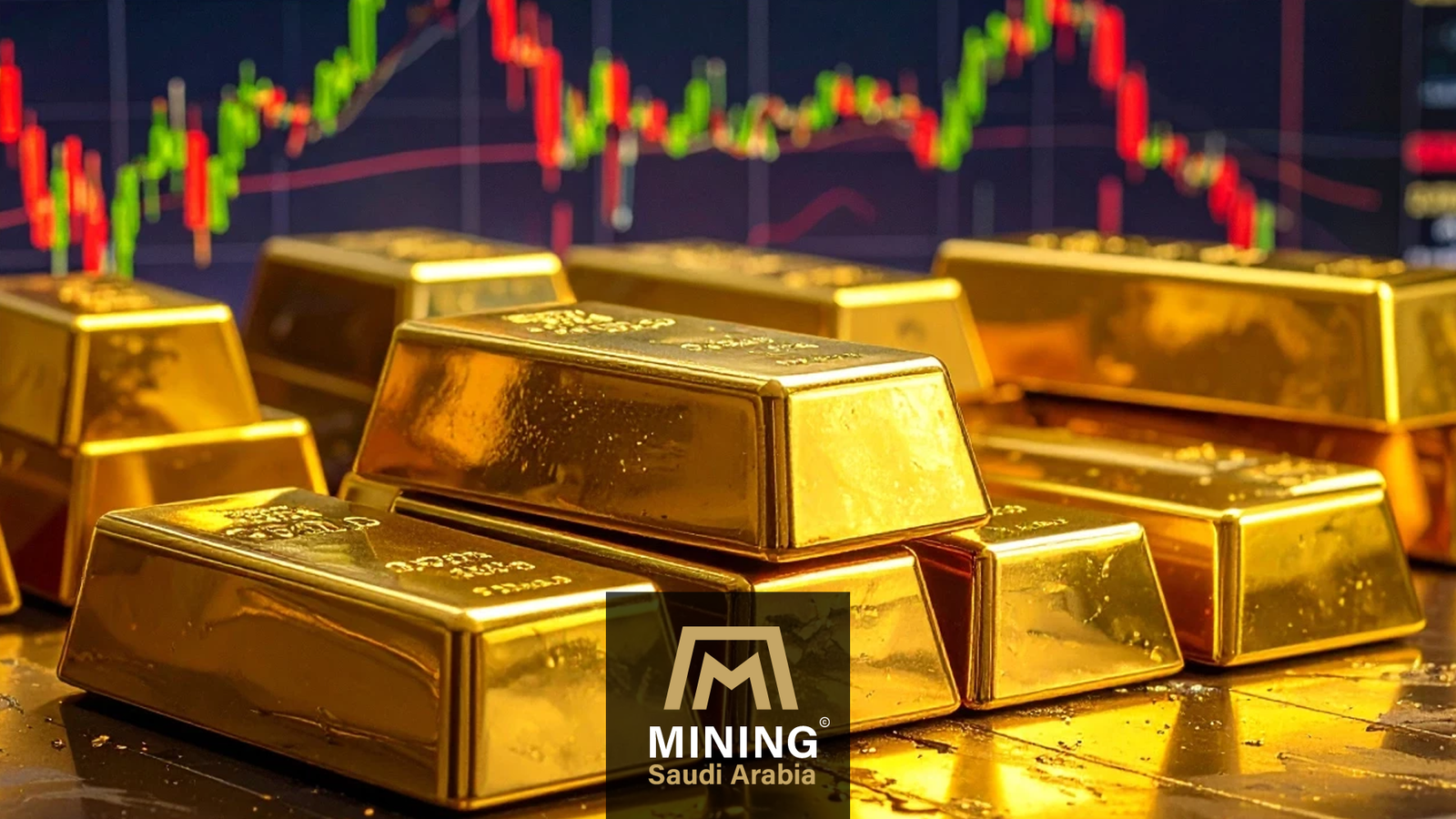
A record high in gold prices in 2026 was followed by the steepest weekly decline in four decades, although most professional forecasters and research houses still see this as merely a stress test within a powerful secular bull market. It is likely that gold will remain in a historically elevated range, with volatility becoming a structural attribute of the market and the metal becoming more important than ever to portfolios and national reserve strategies.
Q1 2026: From Record Highs to a Historic Weekly Drop
On 2 January 2026, gold was around 4,384 dollars per ounce. With macro uncertainty and strong investor demand, it quickly accelerated higher. Earlier this year, the metal had broken through the 5,000 dollar mark for the first time and set a new intraday record near 5,589 dollars, extending a run of 55 daily record highs in 2024.
Approximately 200 million ounces of gold futures were bought and sold as speculative positions were built and unwound in the active February Comex contract, according to Jeffrey Christian, managing partner at CPM Group. Despite the macro narrative turning more complex in early February, the rally stalled as those positions reversed, and gold slipped back toward the mid-4,000s.
With strong ETF inflows and safe haven buying, gold rebounded to around 5,278 dollars by the end of February. On March 1, the price briefly reached over 5,418 dollars intraday and closed near 5,383 dollars.
In March, gold fell back below 5,100 dollars due to profit-taking, changing views on growth and inflation, and liquidity needs elsewhere in portfolios. A psychologically important 5,000 dollar level was broken on 16 March, briefly touching 4,977 dollars before closing near 5,006 dollars. In the following week, a wave of derisking and cash raising pushed prices below 4,500 dollars on 20 March and to roughly 4,100 dollars on 23 March—the lowest point in the quarter and the steepest weekly percentage drop in 40 years.
A partial recovery followed. By 25 March, gold had rebounded back above 4,500 dollars as some investors judged the sell‑off excessive and used the pullback to add exposure. Christian points out that despite the drop, it is still posting record average prices on a quarterly basis for Q1 2026, underscoring how far the long-term uptrend has already pushed the market.
Investment Flows: ETFs, Central Banks, and Gold’s Liquidity Function
Inflow data confirms the bull market’s foundation. It was the ninth consecutive month of net inflows for physically backed gold ETFs in February, according to the World Gold Council. Global gold ETFs held 136.3 million ounces at the end of February 2026, the highest level since the pandemic.
Approximately 55.2 million ounces of net gold investment demand were recorded by CPM Group in 2025, and it is expected to rise to approximately 63.5 million ounces in 2026. Investors have acquired more gold since 2001 than they did in the previous five to six millennia combined, reflecting a structural, global rerating of the metal.
Nonetheless, the March selloff underscores gold’s role in modern portfolios as a liquidity tool. Investors are selling it to raise cash, meet margin calls, or rebalance, with the intent of buying back metal earlier than reentering stocks or bonds. The same behavior explains why gold sometimes falls alongside risk assets during crises but also why it usually recovers more quickly than equities and credit markets.
Central bank activity has become the other major pillar of demand. CPM Group estimates that central banks were net buyers of about 10.2 million ounces of gold in 2025, up from 9.5 million ounces in 2024. It expects continued purchases of roughly 10 million ounces of gold in 2026. The number of central banks adding to reserves rose to around 32 in 2025 from a five‑year average of about 20. In addition, net sales dropped to 1.18 million ounces, the lowest since 2018.
Historically, central banks have reduced buying. The CPM Group calculates that on a rolling 10-year basis, the correlation between gold prices and central bank net purchases fell to about minus 0.57 over 2008-2025. Approximately 25 percent of global central bank monetary reserves are gold now, up sharply from earlier in the century. Compared with 2008, foreign exchange reserves declined from 89 percent to 69 percent.
Supply, Costs, and Fabrication: Record Supply, Strong Margins, Weak Jewellery
Total gold supply in 2025 is expected to reach a record 134.2 million ounces, an increase of about 0.5 percent over 2023. As a result of high prices, some old jewelry and decorative items were disposed of, resulting in an increase of 8 percent to 39.2 million ounces. This increase was primarily driven by scrap. Despite this, scrap supply remains below the average of about 47.1 million ounces seen between 2008 and 2012, when economic conditions were more severe, and consumers faced greater financial hardship.
As a result of suspensions at several major mines, mine production declined for the second consecutive year in 2025, more than offset by new project ramp-ups. As some suspended operations restart and new capacity continues to be built in jurisdictions like Canada, CPM Group expects total supply to again reach a record close to 134.2 million ounces in 2026, this time with scrap and mine contributions.
Inflation is pushing up labor, energy, and equipment costs, leaving miners with unusually large buffers even as gold prices trade between 4,000 and 5,000 dollars, implying cash margins of roughly 2,900 dollars and AISC margins of approximately 1,780 dollars.
On the demand side, fabrication has been a weak link. Demand for jewelry and other fabrications fell sharply in 2025, reaching 68.8 million ounces, its lowest level since 1990, as 64 percent increases in prices squeezed consumers and retailers. A change in VAT rules in China raised the tax burden for some gold products bought outside of the Shanghai Gold Exchange network.
Saudi Arabia: Local Prices, Demand and Vision 2030
The global gold market has entered a transformative phase in early 2026, and for Saudi Arabia, the impact is hitting home in a very direct way. Because the Saudi riyal is pegged to the US dollar, any shift in international gold prices mirrors almost instantly in local markets. With analysts projecting averages between $4,500 and $5,000—and some even bracing for a surge toward $6,000 if global tensions don’t ease—gold isn’t just a traditional luxury anymore; it’s a high-stakes financial asset trading at record highs.
This momentum actually started picking up speed last year. In the first quarter of 2025, Saudi demand for gold coins and bars jumped by 16%, marking the busiest year for bullion since 2014. This surge confirms that the Kingdom is becoming a powerhouse in the Middle East’s physical gold market. For families, it remains the ultimate safety net, but the current volatility means that “buying in” now requires much more careful timing and a smarter approach to diversification than it did in decades past.
Beyond personal savings, these record-high prices are a massive win for the Saudi mining industry. Because gold is regaining its status as a central pillar of the global financial system, there is a huge opening for Saudi Arabia to innovate. We are seeing a move toward sophisticated, Shariah-compliant products like gold-backed sukuk and tokenized bullion platforms that serve both local savers and international institutions.
For the average person, it’s a trusted but increasingly expensive store of value. For policymakers and institutional investors, it’s a strategic opportunity to deepen the mining sector, reinforce the Kingdom’s role as a regional trade hub, and lead the way in new, gold-linked financial technology.
The capabilities required to explore, build, and operate competitive gold mines, drilling services, mine engineering, geoscience, environmental management, logistics, and digital mining technologies are largely transferable to other priority minerals in the Vision 2030 portfolio. In that sense, Q1 2026’s price regime is not just a windfall; it is a window in which Saudi Arabia can accelerate the build‑out of a mining ecosystem that will underpin diversification long after this particular gold cycle matures.
Read Also: Saudi Mining Sector: Powerful Drivers Behind Its Rapid Growth