
Chile and the United States have taken a new step toward strengthening global critical minerals supply chains after signing a joint statement to begin formal discussions on cooperation in the mining sector.
According to Chile’s Ministry of Foreign Affairs, the agreement was announced on March 12 and will initiate bilateral discussions focused on critical minerals and rare earth elements. The first official meeting between both sides is expected to take place within the next two weeks.
The discussions are expected to explore several areas of cooperation, including financing for mining projects, mineral recycling initiatives, and joint exploration efforts aimed at increasing the global supply of strategic minerals.
Strengthening Critical Mineral Supply Chains
The collaboration reflects growing international efforts to secure stable supplies of critical minerals that are essential for modern technologies. These materials play a key role in industries such as electric vehicles, semiconductors, defence systems, and consumer electronics.
In recent years, the United States has intensified its strategy to diversify critical mineral supply chains and reduce dependence on China, which currently dominates the global processing and supply of many rare earth elements.
Speaking during a visit to Chile, US Deputy Secretary of State Christopher Landau emphasized the strategic importance of cooperation between the two countries.
“I believe there is much we can do with the United States and Chile to strengthen the supply chains of these minerals,” Landau said while addressing journalists.
The agreement was formally signed in Santiago by Landau and Chile’s Minister of Foreign Affairs Francisco Perez Mackenna, during a ceremony overseen by Chile’s newly sworn-in president José Antonio Kast, who assumed office on March 11.
Chile’s Strategic Role in the Global Mining Industry
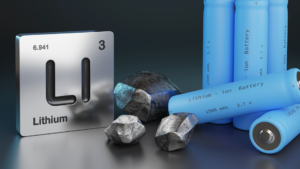
Chile is one of the world’s most important mining jurisdictions, holding a dominant position in several critical mineral markets. The country is currently the largest producer of copper globally and the second-largest producer of lithium, a key material used in battery manufacturing for electric vehicles and energy storage systems.
Chile’s vast mineral resources have long attracted international mining investment, particularly from companies involved in the energy transition supply chain.
One notable example is Albemarle, a US-based chemicals company headquartered in North Carolina, which has been producing lithium in Chile’s Atacama region for more than five decades. The company’s operations have helped position it as one of the largest lithium producers globally.
New Investment in Chile’s Lithium Sector
The partnership discussions also come as new investments in Chile’s lithium industry continue to emerge.
EnergyX, a lithium technology start-up based in Puerto Rico and backed by General Motors, is planning a major lithium processing facility in Chile. The project is expected to require an investment of approximately US$1.1 billion and is scheduled to begin operations in 2028.
Once operational, the facility is projected to produce up to 50,000 tonnes of lithium annually, contributing to the growing demand for battery materials.
Teague Egan, CEO of EnergyX, described the new agreement between Chile and the United States as an important initial step toward deeper cooperation in the minerals sector.
“This is a good first step on Kast’s first day in office to sign something of a framework agreement with the US,” Egan said.
Growing Global Competition for Critical Minerals
The announcement reflects the increasing geopolitical importance of critical minerals, which are becoming central to global energy transition strategies and advanced manufacturing.
Countries are now seeking stronger partnerships to secure access to essential raw materials, develop new mining projects, and strengthen mineral processing capabilities.
For both Chile and the United States, cooperation in this area could help support future demand for battery metals, rare earth elements, and other strategic resources that are expected to play a major role in the next generation of industrial technologies.