Modern geochemistry in Saudi mining has become a critical pillar in advancing mineral exploration and supporting the Kingdom’s Vision 2030 objectives. As Saudi Arabia accelerates its efforts to position mining as a key economic sector, geochemical techniques are playing a central role in uncovering previously hidden mineral resources and enhancing exploration accuracy.
With an estimated $2.5 trillion in untapped mineral potential, the integration of advanced technologies, including ICP-MS, AI-driven analysis, and satellite geophysics, is enabling a shift from traditional exploration methods to data-driven discovery. This transformation is particularly significant in the Arabian Shield, where modern geochemical analysis is helping identify high-value mineral deposits with greater precision and efficiency.
What is the Role of Geochemistry in Saudi Mining?
Modern geochemistry in Saudi mining serves as the strategic backbone of contemporary mineral exploration. The discipline has evolved from a descriptive scientific method into a predictive tool capable of guiding exploration from early reconnaissance to precise drilling targets.
Within the framework of Vision 2030, geochemistry is essential to transforming mining into the third pillar of the Saudi economy, alongside oil and petrochemicals.
Key indicators highlight the sector’s potential:
- Saudi Arabia’s untapped mineral resources are estimated at $2.5 trillion USD
- Advanced geochemical analysis helps decode the geological history of the Arabian Shield
How Exploration Geochemistry Works
Exploration geochemistry focuses on the quantitative distribution of chemical elements in the lithosphere.
Key principles include:
- Trace elements act as molecular indicators, revealing ore-forming processes
- High-precision technologies such as Inductively Coupled Plasma Mass Spectrometry (ICP-MS) detect ultra-trace concentrations
- These technologies help geologists identify “blind deposits” hidden beneath thick sedimentary cover or volcanic layers
How Has Trace Element Analysis Evolved in Modern Mining?
Over the last four decades, geochemical measurement has undergone a major transformation. Exploration has moved from labor-intensive wet chemistry methods to automated high-precision analytical systems capable of detecting elements at parts-per-trillion (ppt) levels.
Key Technologies in Modern Geochemical Exploration
|
Technology |
Function | Advantage |
|
ICP-MS |
Multi-element analysis | Ultra-high sensitivity |
|
HR-ICP-MS |
Resolves spectral interferences |
Precise ion differentiation |
|
CCT / DRC |
Removes polyatomic interference |
Cleaner analytical signals |
| LA-ICP-MS |
Direct in-situ mineral analysis |
Preserves geological context |
Field vs Laboratory Technologies
Laboratory Techniques
- ICP-MS generates high-precision datasets
- Supports advanced geochemical modeling
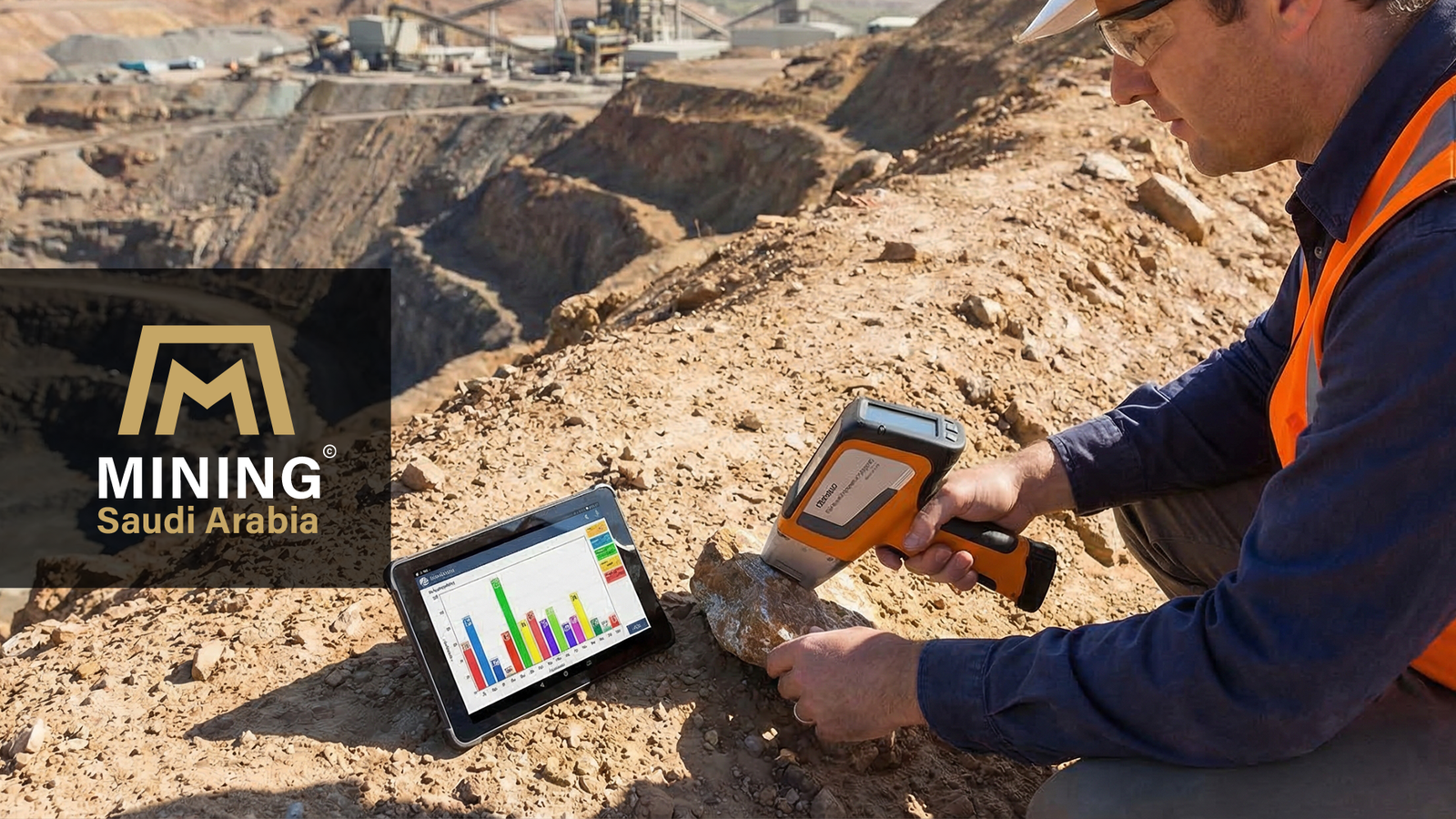
Field-Portable Technologies
- Portable X-Ray Fluorescence (pXRF)
- Laser-Induced Breakdown Spectroscopy (LIBS)
These tools allow exploration teams to:
- Expand sampling grids in real time
- Make rapid decisions during drilling campaigns
What Are Geochemical Fingerprints and How Do They Determine Ore Provenance?
A geochemical fingerprint refers to the unique chemical signature that characterizes each mineral deposit. This signature reflects the deposit’s tectonic setting and thermal history.
In the Arabian Shield, geochemical fingerprints help geologists differentiate between:
- Volcanogenic Massive Sulfide (VMS) deposits
- Hydrothermal systems associated with granitic intrusions
Role of Rare Earth Elements (REEs)
Rare earth elements are highly effective geochemical tracers because they preserve signatures inherited from source rocks.
Key indicators include:
- LREE Enrichment
Indicates evolved crustal sources or felsic magmas. - Europium Anomaly (Eu)
Often linked to feldspar crystallization during magmatic evolution.
Isotopic Analysis in Mineral Exploration
Isotopic ratios provide additional evidence regarding ore formation processes.
Important isotopic indicators include:
- Lead (Pb)
- Sulfur (S)
- Iron (δ57Fe)
For example, iron isotope studies have revealed that certain iron deposits in Saudi Arabia originated from specific granitic plutons, enabling geologists to identify priority exploration zones surrounding these intrusions.
How Are Drilling Targets Identified Using Dispersion Halos and Pathfinders?
Drilling is the most capital-intensive phase of mineral exploration. Exploration geochemistry reduces this risk by identifying chemical signatures known as dispersion halos surrounding ore bodies.
Types of Geochemical Halos
|
Halo Type |
Description |
|
Primary Halos |
Formed in the surrounding rocks during ore deposition |
| Secondary Halos |
Form through weathering and element transport |
Importance of Wadi Sediment Sampling
In the arid environment of Saudi Arabia, wadi sediment sampling is a powerful reconnaissance technique.
- Wadi sediments act as bulk samples of upstream geology
- They help identify potential mineralized zones across large areas
Pathfinder Elements in Exploration
Pathfinder elements occur alongside target metals and help guide exploration.
For orogenic gold systems in the Arabian Shield:
- Arsenic (As)
- Antimony (Sb)
- Tellurium (Te)
For VMS deposits:
- Barium (Ba) indicates submarine volcanic activity associated with copper-zinc systems
What Are the National Exploration Initiatives in Saudi Arabia?
Saudi Arabia has launched major national programs to expand geological data and support mineral exploration.
Regional Geological Survey Program (RGP)
Key achievements include:
- Collection of approximately 88,000 wadi sediment samples
- Coverage of 540,000 square kilometers of the Arabian Shield
National Geological Database (NGD)
Each collected sample is analyzed for 76 chemical elements, creating a high-resolution geochemical atlas.
Key characteristics:
- Integrated within the National Geological Database
- Open-access platform for investors and researchers
- Ranked third globally for investor accessibility
What Are the Strategic Mineral Opportunities in Saudi Arabia?
Saudi Arabia’s mining strategy focuses on securing supply chains for minerals essential to the global energy transition.
Key Mineral Opportunities
|
Mineral |
Key Insight |
|
Gold |
Mansourah-Massarah produces 250,000 ounces annually |
|
Copper |
Jabal Sayid is a major world-class copper producer |
|
Zinc |
Present in polymetallic belts |
|
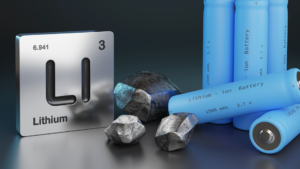
Lithium |
Concentrations exceeding 400 ppm in oil-field brines |
| Rare Earth Elements |
Development through international partnerships |
Companies such as Aramco and Ma’aden are exploring lithium extraction from oil-field brines, while partnerships with MP Materials aim to build a vertically integrated rare earth supply chain.
How Are AI and Satellite Geophysics Integrated into Exploration?
Modern mineral exploration increasingly integrates geochemistry, artificial intelligence, and satellite geophysics.
ExoSphere Platform
- Developed through Ma’aden’s partnership with Fleet Space
- Uses satellite-connected sensors to generate 3D subsurface images
- Exploration depth up to 500 meters
- Survey coverage of 12,000 km²
Machine Learning in Exploration
Algorithms such as Isolation Forests are used to:
- Filter geological noise
- Identify multivariate anomalies
- Detect hidden mineral systems
What Technical Challenges Exist for the Saudi Mining Sector?
Water Scarcity
Water availability remains a major operational challenge for remote mining operations.
Technological and Operational Solutions
Brine Mining
- Extracts minerals such as magnesium and potassium from desalination byproducts
- Could reduce desalination costs by up to 50%
Zero-Water Discharge
- Projects such as the Mazoon copper project aim to recycle 100% of process water
Financial Incentives for Exploration
The Exploration Enablement Program (EEP) provides:
- A $182 million fund
- Financing for up to 25% of early-stage exploration costs
- Support for international junior mining companies entering the Saudi market
Conclusion: The Future of Geochemistry in Saudi Mining
Modern geochemistry in Saudi mining, supported by ultra-trace element analysis and AI-driven exploration targeting, is transforming how mineral resources are discovered and developed.
By shifting from broad regional surveys to technology-enabled precision exploration, Saudi Arabia is rapidly bridging the gap between geological potential and industrial production.
Through the integration of advanced geoscience, sustainable resource management, and supportive regulatory frameworks, the Kingdom is positioning itself as a global leader in the supply of strategic minerals for the decades ahead.
Read Also: 4 Critical Ways Drones in Mining Exploration Are Transforming Geological Fieldwork