Digital Geology 3D Modeling is transforming how the Saudi mining sector identifies and extracts mineral resources. As the Kingdom advances mining as the third pillar of its economy under Vision 2030, the shift from traditional mapping to digital geoscience is reducing uncertainty, improving precision, and accelerating investment decisions.
This transformation is strategic. For investors and engineers, understanding digital geology is essential to maximizing resource recovery while minimizing operational and financial risks.
Why Shift from Traditional to Digital Geology in 3D Modeling
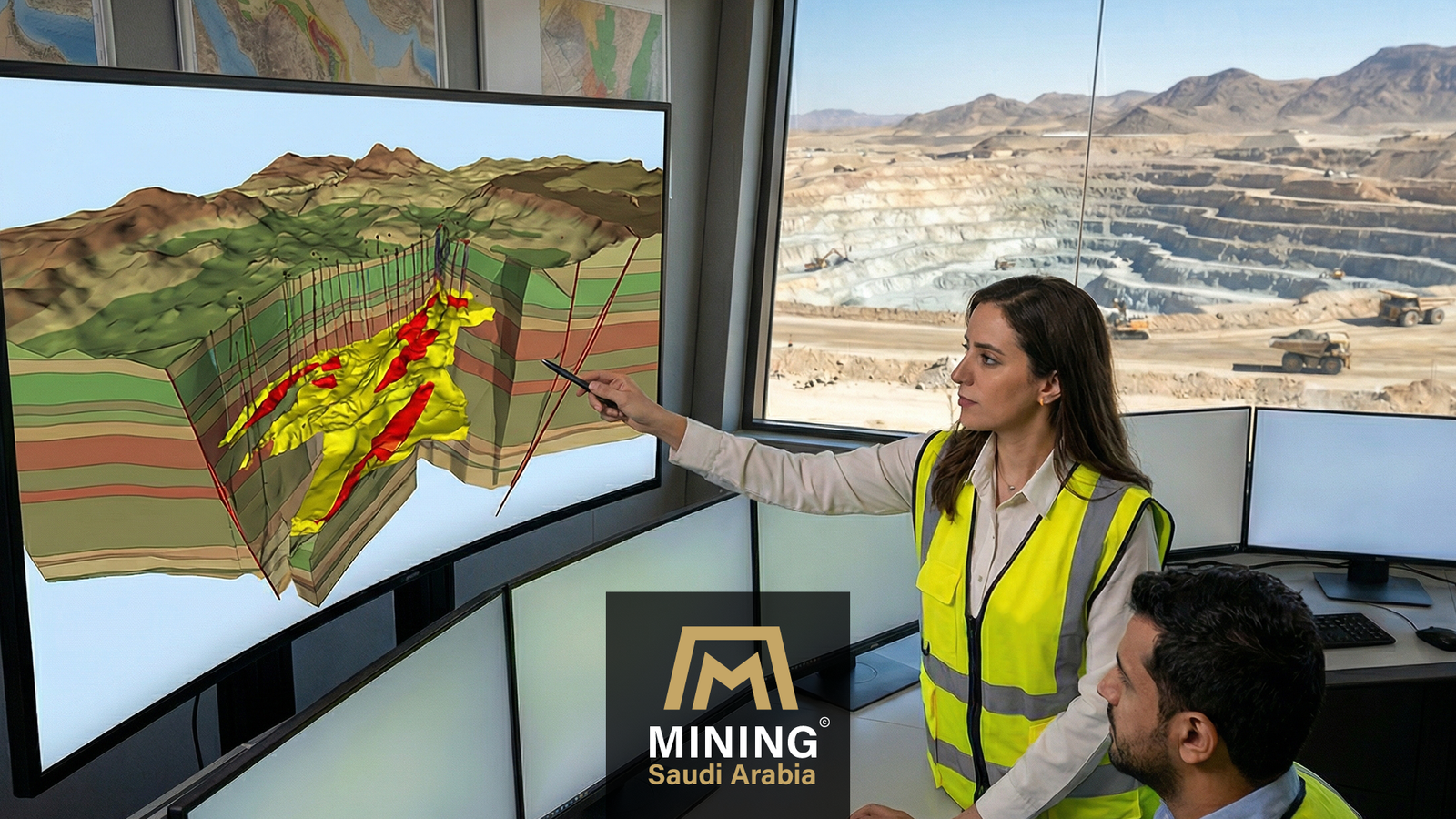
Digital Geology 3D Modeling replaces traditional 2D mapping with integrated 3D models that provide more accurate, data-driven insights into subsurface structures.
Traditional geology relies heavily on surface maps and manual cross-sections, which often fail to capture the complexity of deep mineral deposits. In contrast, 3D digital geology modeling enables a more complete and actionable understanding of the underground environment.
Key advantages include:
- Volumetric accuracy improves resource estimation
- Predictive drilling reduces exploration risk
- Integrated data enhances decision-making
- Digital analysis improves operational safety
Phases of the Digital Roadmap
Transitioning to a fully digital geological environment requires a structured and phased approach.
1. Data Digitalization and Legacy Conversion
The process begins by converting physical archives such as paper maps, core logs, and historical reports into standardized digital formats. Saudi Arabia’s National Geological Database plays a key role in centralizing and enabling access to this data.
2. High-Resolution Remote Sensing
Satellite imagery and drone-based technologies such as LiDAR and magnetic surveys are used to generate highly accurate digital terrain models. These models form the surface layer of 3D geological systems.
3. Subsurface 3D Wireframing
Using drilling data from diamond core and reverse circulation methods, geologists construct digital wireframes. These structures represent geological boundaries and mineralization zones beneath the surface.
Key Technologies in Digital Mapping
Technology is the backbone of digital geology and plays a critical role in reducing uncertainty and improving project outcomes.
Core technologies include:
- Implicit modeling software that generates geological surfaces from drill data
- Geographic Information Systems (GIS) for managing spatial datasets
- Photogrammetry for creating 3D models of mine environments
- Cloud computing for real-time data processing and collaboration
Economic Impact of 3D Geological Modeling
Digital geology focuses on improving the “Value of Information.” While initial investments may be high, the long-term economic benefits are substantial.
| Impact of 3D Modeling | Economic Factor |
|---|---|
| Reduces wasted drilling through better targeting | Drilling Costs |
| Improves confidence in reserve classification | Resource Estimation |
| Speeds up feasibility studies with simulation tools | Project Timelines |
| Enhances transparency for investors | Investor Confidence |
Challenges in the Digital Transition
Despite its advantages, the transition to digital geology presents several challenges.
- High initial capital expenditure for software and hardware
- Data interoperability issues between different systems and providers
- Shortage of professionals skilled in both geology and digital tools
Investment Opportunities in Digital Geoscience
The digital transformation of the Saudi Arabian Shield creates strong opportunities for technology providers and specialized service companies.
Key opportunities include:
- 3D visualization and geological modeling services
- Drone-based surveying and data acquisition
- Digital twin development for mining operations
Why Investors Value Digital Maturity
Digitally advanced mining projects are more attractive to investors due to their reduced uncertainty and improved transparency.
Key reasons include:
- Reduced discovery risk through virtual modeling
- Faster decision-making supported by real-time data
- Stronger positioning under the Saudi Mining Investment Law
Conclusion
Digital Geology 3D Modeling is no longer optional in modern mining. It enhances precision, reduces operational risk, and strengthens investor confidence.
For Saudi Arabia, this transformation is a critical step toward unlocking the full potential of the Arabian Shield and building a globally competitive mining sector based on data, efficiency, and advanced technology.
Read Also: Saudi Mining Sector: Powerful Drivers Behind Its Rapid Growth