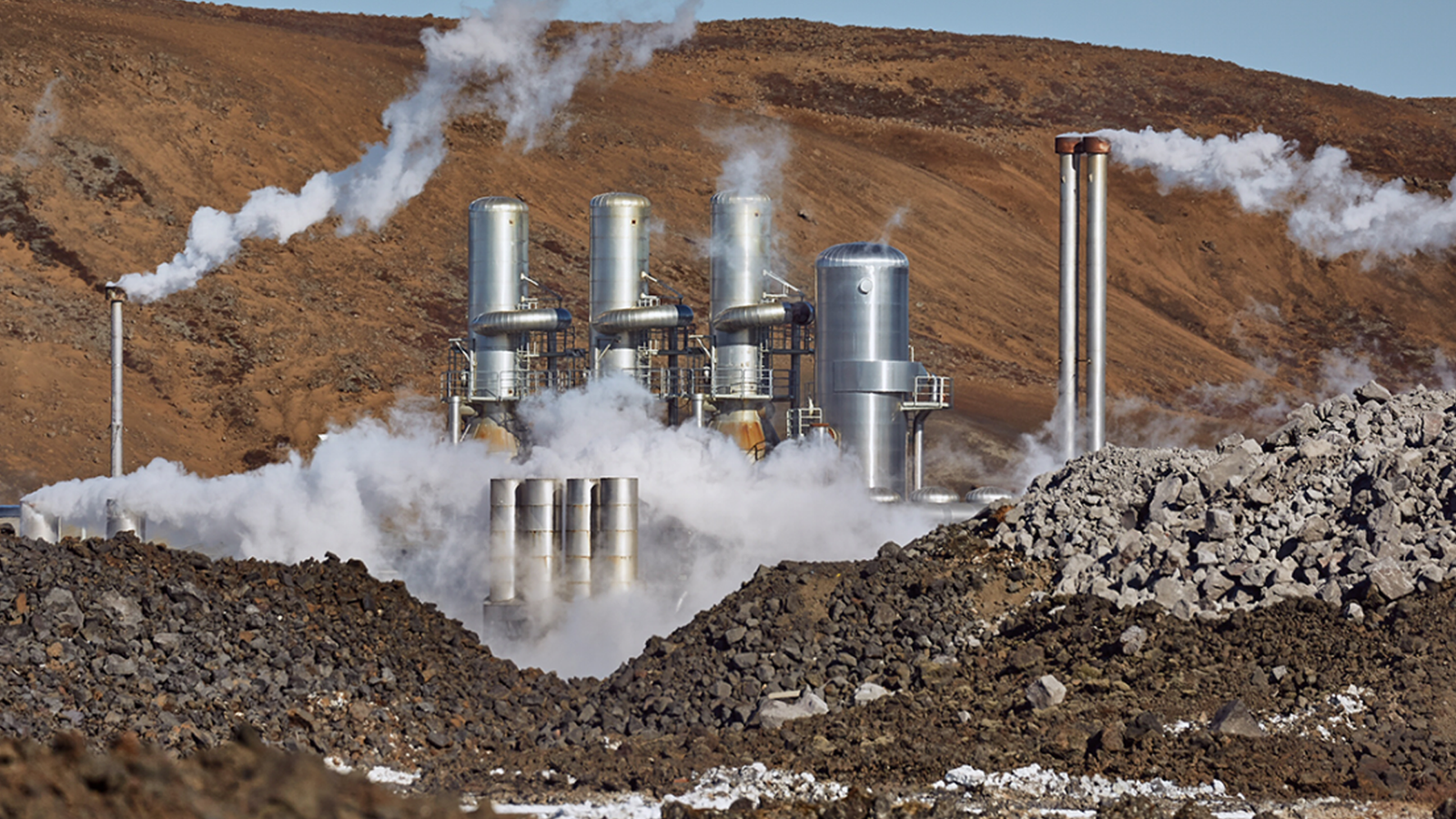
Saudi Arabia is globally recognized for its vast oil and gas reserves, but beneath its golden sands and rugged mountains lies a different kind of treasure: geothermal energy in Saudi Arabia.
As the Kingdom moves toward its Vision 2030 goals of energy diversification and sustainable mining, understanding the “underground plumbing” of the Arabian Shield has become increasingly important.
Specifically, the hydrothermal systems of Central and Western Saudi Arabia offer two distinct geological narratives. While one is driven by ancient tectonic scars, the other is influenced by relatively recent volcanic activity. Understanding these differences is not just a scientific exercise; it is key to unlocking localized power for remote mining operations and reducing the carbon footprint of the industrial sector.
Why Geothermal Energy in Saudi Arabia Matters for Mining’s Future
Geothermal energy in Saudi Arabia could play an important role in supporting future mining and industrial operations, especially in remote areas where power supply and fuel logistics remain major challenges.
For mining companies, geothermal systems are not only potential sources of electricity. They can also provide process heat, support lower-carbon operations, and help reduce dependence on transported diesel fuel.
This makes geothermal energy in Saudi Arabia closely linked to the future of sustainable mining in the Kingdom.
Why Geography Matters in Saudi Geothermal Exploration
The primary challenge in geothermal exploration within the Kingdom has been the risk of using a “one-size-fits-all” approach.
For years, general surveys treated the Arabian Shield as a monolithic block of Precambrian rock. However, mining companies and energy developers face a significant gap: the lack of site-specific hydrothermal modeling.
Without a clear technical comparison between regions, investors face higher risks. A drilling strategy that works in the volcanic fields of the West may not work in the crystalline terrains of the Center.
Bridging this gap requires a deeper look at the heat sources, fluid pathways, and mineral potential of these two regions.
Western Saudi Arabia: The Volcanic Geothermal Powerhouse
The Western region, running along the Red Sea coast, is home to the Harrats, which are massive Cenozoic volcanic fields.
This area is geologically younger and more dynamic, making it a primary candidate for higher-enthalpy geothermal energy compared with other parts of the Kingdom.
The Red Sea Rift and the Heat Source
In Western Saudi Arabia, the heat source is more direct and potent.
The thinning of the Earth’s crust due to the opening of the Red Sea has allowed mantle plumes to rise closer to the surface. Systems such as Harrat Rahat and Harrat Khaybar may benefit from residual heat trapped in cooling magma chambers.
This magmatic legacy gives Western Saudi Arabia a different geothermal profile from the central parts of the Arabian Shield.
Fluid Pathways, Fault Lines, and Permeability
The hydrothermal systems in Western Saudi Arabia are characterized by several important features.
First, temperatures can be high, with waters often exceeding 100°C–150°C at relatively shallow depths.
Second, tectonic activity related to the Red Sea rift has created extensive fault lines. These fault lines can act as pathways for heated water to circulate and rise.
Third, the chemical signature of these waters is often rich in chlorides and silica, reflecting their deep-seated volcanic origins.
Together, these features make Western Saudi Arabia an important area for geothermal exploration and potential power generation.
Central Saudi Arabia: The Radiogenic Geothermal Frontier
Moving toward the interior, the geological story changes.
Central Saudi Arabia lacks the active volcanic systems found in the West. Instead, it depends on a more subtle and “quiet” form of geothermal energy: radiogenic heat.
This makes Central Saudi Arabia a different type of geothermal frontier, one shaped more by ancient rocks, basement faults, and long-term heat production.
High-Heat-Producing Granites in the Arabian Shield
The hydrothermal systems in Central Saudi Arabia are often driven by high-heat-production granites.
These ancient rocks contain elevated concentrations of elements such as uranium, thorium, and potassium. As these elements naturally decay over millions of years, they release steady and reliable heat.
This heat source is different from the magmatic systems of Western Saudi Arabia. It is less obvious at the surface, but it can still be important for localized industrial heat and mining operations.
Deep Basement Faults and Fluid Connectivity
Unlike the volcanic “highways” of Western Saudi Arabia, the central systems depend on deep basement faults.
In these systems, heat is harvested by water circulating through deep-seated faults in the Precambrian basement.
The difference between conduction and convection is important here. Western systems are generally more convective, with faster-moving water. Central systems are more conductive, meaning the rock stays hot, but water may move more slowly through tighter mineralized veins.
These systems may also be linked to fossilized hydrothermal centers, which can provide important indicators for rare earth elements and base metal potential.
Central vs Western Saudi Arabia: Technical Geothermal Comparison
The difference between Central and Western Saudi Arabia is not only geographical. It is also technical.
Each region has a different heat source, geological age, fluid movement pattern, and potential use case for mining and energy development.
This comparison shows why geothermal energy in Saudi Arabia requires region-specific exploration and development strategies.
| Feature | Central Saudi Arabia / Najd / Arabian Shield | Western Saudi Arabia / Harrats |
| Main Heat Source | Radiogenic decay in High Heat Production granites | Magmatic and mantle-related heat |
| Geological Setting | Precambrian, ancient basement rocks | Cenozoic, younger volcanic fields |
| Temperature Potential | Medium to high geothermal gradient | High to very high geothermal potential |
| Fluid Movement | Slower movement through basement fractures | Faster movement through tectonic rifts and fault networks |
| Best Use Case | Mineral extraction, process heat, localized industrial use | Large-scale geothermal power generation |
A Harrat system should not be treated the same way as a radiogenic granite system.
Integrated Geothermal Mapping for Saudi Arabia
Based on recent thesis findings and geological modeling, the solution to the energy gap lies in region-specific exploration and development strategies.
The proposed solution involves a three-tier geothermal exploration framework.
Magnetotelluric Sounding for Western Volcanic Systems
Magnetotelluric sounding can be used to map fluid-saturated zones in Western Saudi Arabia.
This technique uses electromagnetic waves to identify subsurface conditions and can be especially useful in volcanic terrains where fluids and heat may be connected through fault networks.
In Western systems, this method can help improve the understanding of where hydrothermal fluids are located and how they move through the subsurface.
Radiometric Surveying for Central Granite Terrains
Radiometric surveying is particularly relevant for Central Saudi Arabia.
Because Central systems are often linked to High Heat Production granites, radiometric surveying can help identify “hotspots” by measuring gamma-ray emissions.
This is important in areas where geothermal potential may not be obvious from surface volcanic activity.
Hydrochemical Fingerprinting for Fluid Pathways
Hydrochemical fingerprinting can help determine the depth and residence time of geothermal waters.
By analyzing isotopes in local wells, exploration teams can better understand where the water has been, how long it has circulated underground, and whether it is connected to deeper heat sources.
This method helps connect surface observations with deeper hydrothermal processes.
How Geothermal Energy in Saudi Arabia Can Support Mining Operations
By applying localized geothermal exploration techniques, mining sites may be able to better identify where they can tap into the Earth’s heat.
This can support crushers, smelters, camps, and other mining operations without relying entirely on expensive diesel transport.
For remote mining areas, geothermal energy in Saudi Arabia could provide a stable baseload source that complements other renewable energy options such as solar and wind.
Reducing the Carbon Footprint of Mining
Understanding hydrothermal systems has an impact that extends beyond electricity generation.
It touches the core of the Saudi Mining Strategy by supporting decarbonization and lower-carbon industrial operations.
Using geothermal heat for mineral processing can help mining companies reduce emissions and strengthen their ESG positioning.
This is especially important as global markets place more pressure on mining companies to prove that their supply chains are cleaner and more sustainable.
Reducing Fuel Logistics and Operating Costs
Remote mines in Central Saudi Arabia can spend large amounts on fuel logistics.
A localized hydrothermal loop may provide a 24/7 baseload energy source that solar and wind cannot always match without large-scale battery storage.
This does not mean geothermal energy replaces every other energy source. Instead, it can become part of a more resilient energy mix for remote industrial sites.
Hydrothermal Systems and Mineral Discovery
Hydrothermal systems are not only important for energy. They are also closely connected to mineral discovery.
Hydrothermal fluids are primary transporters of metals. By mapping current geothermal systems, geologists can gain a better understanding of where ancient mineral deposits may have formed.
This is especially relevant for deposits such as gold, copper, and zinc.
In this sense, geothermal exploration can support both energy planning and mineral targeting.
The Future of Geothermal Energy in Saudi Arabia
Saudi Arabia stands at a unique crossroads.
In the West, the Kingdom has promising conditions for high-temperature geothermal power linked to volcanic systems and Red Sea rift activity.
In the center, the focus shifts toward localized, high-efficiency heat for mining and industrial operations connected to radiogenic granites and basement fault systems.
By distinguishing between the volcanic heat of the West and the radiogenic warmth of the Center, geothermal energy in Saudi Arabia can move from general exploration to more precise geothermal development.
Read Also: Sedimentary Cover in Mineral Exploration: Unlocking Hidden Mineral Deposits with Advanced Geophysics