The reported find could support Saudi Arabia’s long-term nuclear and mining ambitions. Its significance, however, will depend on further exploration, independent resource verification, commercial feasibility studies, and strong environmental and regulatory oversight.
Saudi Arabia has announced the discovery of an estimated 110 million tonnes of ore containing uranium concentrations in the Madinah region. The statement, delivered by Energy Minister Prince Abdulaziz bin Salman at the International Atomic Energy Agency’s General Conference, immediately framed the find as part of a larger national project: building a mining industry that can supply critical minerals, support a future civilian nuclear program, and reduce the Kingdom’s dependence on imported materials.
A discovery at the intersection of three strategies
As well as uranium concentrations, the site contains heavy rare earth elements, which are used in magnets, electronics, defence systems, and advanced manufacturing processes. The location is already associated with an estimated 552,000 tonnes of heavy rare earths and 355,000 tonnes of light rare earths, according to official reports.
In the event that those estimates are validated by further drilling and independent evaluation, the project could become more than a uranium prospect. As part of a multi-mineral development, rare earth recovery could support uranium extraction, processing, and infrastructure. It would be familiar to a mining industry that is increasingly focused on byproducts and strategic materials rather than a single product.
Furthermore, this would be in line with the Kingdom’s efforts to attract foreign technology and capital.
Why uranium matters to Saudi Arabia
Uranium is valuable to a country planning nuclear power for reasons that go beyond the price of the mineral itself.
Nuclear reactors require a dependable fuel supply over decades. A domestic resource could give Saudi Arabia greater control over one part of that chain and reduce exposure to disruptions in international markets. It could also give the Kingdom leverage in negotiations with reactor suppliers, which often seek long-term commitments for fuel, technology, and services.
The strategic case is strengthened by the concentration of global uranium production. The leading producers are a relatively small group of countries, and new supply can take years to develop because projects must move from geological exploration through feasibility studies, permitting, construction, production, and processing.
A recent review in “Discover Sustainability” describes the same constraint in broader terms: substantial identified resources do not automatically become reliable, licensable supply. Geology, regulation, infrastructure, conversion capacity, and enrichment bottlenecks all matter.
A nuclear fuel cycle depends on specialized facilities, technical expertise, regulatory institutions, and international approvals. But it could give the Kingdom an additional strategic option as it seeks to diversify its electricity system, expand desalination capacity, and develop a domestic nuclear industry.
The energy argument is also part of the climate argument. Nuclear power produces electricity without direct operational carbon emissions and can supply firm power when solar and wind output varies. The industry source supplied for this article notes that nuclear power currently provides about 10% of global electricity. That figure should be read as context, not a forecast: whether nuclear expansion accelerates will depend on costs, construction times, public acceptance, regulation and the availability of qualified suppliers.
From ore to yellowcake is a long road.
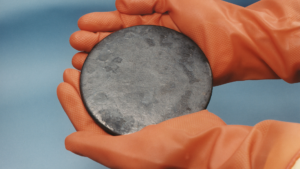
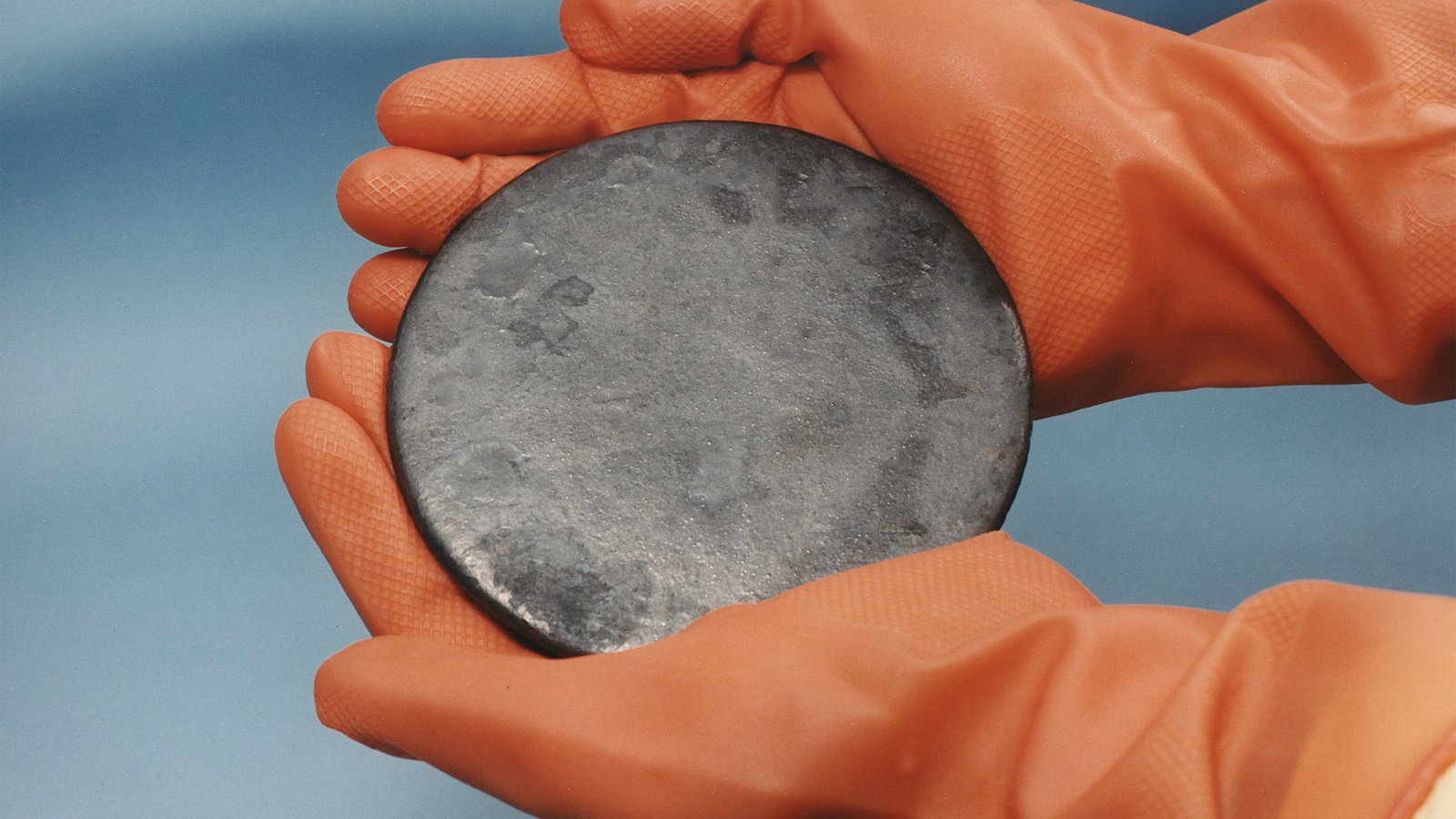
Uranium ore is a mixture of minerals and rock. Uranium content must be measured, extracted, and processed into yellowcake, a concentrated product. A project must demonstrate that it is capable of meeting water use requirements, radiation protection requirements, tailings management requirements, land rehabilitation requirements, and community safety requirements at a competitive cost.
The OECD Nuclear Energy Agency and IAEA distinguish between geological resources and economically recoverable reserves. Estimates change as exploration improves, prices move, mining methods develop, and regulators impose conditions.
In other words, a large tonnage can be commercially disappointing if uranium grades are low, the ore is difficult to process or the infrastructure required is too expensive. Consequently, the reported tonne uranium estimate requires attention but not exaggeration; it’s more of an indication of possible scale.
Saudi Arabia has been exploring this territory for years. According to the World Nuclear Association, the Kingdom has discussed using domestic uranium throughout the nuclear fuel cycle, including the production of yellowcake and low-enriched uranium. Also reported in the article is earlier cooperation between Saudi institutions and China’s nuclear industry on uranium exploration, as well as regional work with Jordan on exploration and mining.
As a result, the announcement represents a step in an existing program, rather than the beginning of nuclear activity from scratch. There is a real economic promise, but it comes with conditions. Taxes, royalties, exports, and investments in road, power, education, and health care can all be generated by uranium mining. As the OECD points out in its guide to uranium mining’s social and economic benefits, extraction does not automatically lead to the greatest benefits. Projects depend on procurement policies, workforce development, supply-chain participation, transparent revenue management, and long-term planning.
Saudi Arabia’s mining strategy can benefit from that lesson. The value of a mine that exports unprocessed material would be less than a mine connected to laboratories, engineering services, processing facilities, and downstream manufacturing. A project that trains local workers and builds supplier capacity could continue to produce benefits after a deposit is exhausted. A project that concentrates revenue while leaving environmental liabilities behind could do the opposite.
Rare earths may improve the commercial case, but they also complicate it. The minerals require specialized separation and processing. The market is exposed to technological change, price volatility, and geopolitical competition. Heavy rare earths are strategically important, but their importance does not guarantee a profitable operation.
Investors will want detailed drilling data, metallurgical test work, infrastructure plans, capital costs, operating costs and a credible route to market. The Kingdom may be able to assemble a broader industrial system around a multi-mineral deposit, domestic energy demand, and international partnerships.
Environmental and governance test: Uranium carries a burden that ordinary mining projects do not bear. The risks include exposure to radiation, contamination of groundwater, management of tailings and the long-term stewardship of mine sites.
A 2026 review of sustainable uranium supply identifies groundwater integrity, tailings, land disturbance, in-situ recovery and restoration,, and community consent as risks that can determine whether a project retains its social license. Modern mining methods can reduce some impacts. In-situ recovery, for example, can limit surface disturbance where geology and groundwater conditions make it suitable. But no method removes the need for independent baseline studies, continuous monitoring, financial guarantees for closure,, and institutions capable of enforcing rules over decades.
What Mining Saudi Community readers should watch next
The next phase should be measured in data and continue information sharing.
The critical questions are straightforward:
- What is the uranium grade, and how widely does it vary across the deposit?
- How much of the reported resource is classified under internationally recognized resource categories?
- What extraction and processing method is being considered?
- What are the groundwater, waste, radiation, and closure plans?
- Who will regulate the mine and verify the resource estimate?
- How will revenues, local jobs, and procurement opportunities reach communities?
- What parts of the nuclear fuel cycle will be performed domestically, and under what safeguards?
Those answers will determine whether the discovery becomes a mine, a processing hub, a bargaining chip in nuclear diplomacy, or simply another large geological estimate.
For Saudi Arabia, the opportunity is significant. Uranium could help support a future nuclear power sector, while rare earths could strengthen the Kingdom’s position in emerging supply chains. The project could create a test case for whether Vision 2030 can turn mineral wealth into industrial capability.
But the discovery’s importance is measured by the quality of the resource data, the discipline of the feasibility work,, and the trust built around the project.