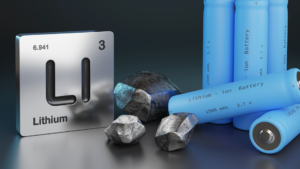
Saudi Arabia is targeting annual production of 2,000 metric tonnes of battery-grade lithium carbonate by the end of 2027, as National Energy Services Reunited (NESR) and Saudi Aramco advance a demonstration project to extract lithium from oilfield brines.
In an interview with Asharq Bloomberg, NESR Chairman and CEO Sherif Foda revealed that the company had successfully completed approximately one year of initial testing with Aramco, demonstrating the commercial potential of extracting lithium from mineral-rich water.
The results have paved the way for a larger demonstration facility designed to test the technology at scale and lay the groundwork for future commercial production.
The project is being developed under an agreement valued at approximately $200 million over a period of up to five years, officially announced by NESR on October 8, 2026.
From Successful Pilot Testing to a 2,000-Tonne Lithium Project
According to Foda, the initial pilot focused on determining whether lithium concentrations in the available water were sufficient to support a commercially viable extraction operation.
Following positive results, NESR and Aramco are progressing toward a larger demonstration project targeting annual production of 2,000 metric tonnes of battery-grade lithium carbonate.
Foda described the planned facility as one of the first projects of its scale in the region and potentially worldwide, highlighting the significance of producing lithium carbonate directly from oilfield brines.
The facility is expected to begin production before the end of 2027, with construction and deployment targeted to take approximately one year.
While the initial testing demonstrated the commercial potential of the resource, the demonstration phase will assess whether the technology can operate effectively at a larger scale, providing the basis for a potential full-scale commercial facility.
Foda emphasized that the lithium-bearing water contains significant mineral resources, suggesting that successful implementation could support the development of substantially larger production facilities.
Direct Lithium Extraction: From Oilfield Brines to Battery-Grade Lithium
The project will use Direct Lithium Extraction (DLE), a technology designed to selectively recover lithium from mineral-bearing water.
According to NESR’s official announcement, the project will deploy the company’s LiThara technology platform, integrating brine pretreatment, direct lithium extraction, and carbonation processes.
The process begins with treating the lithium-bearing water before extracting the lithium through DLE technology. According to Foda, the remaining water will then be reinjected, while the recovered lithium will undergo further processing through carbonation to produce battery-grade lithium carbonate.
Unlike conventional lithium extraction methods that rely on prolonged evaporation, DLE technologies enable lithium recovery directly from liquid feedstocks through specialized separation systems.
Foda also indicated that NESR is exploring the potential to recover additional minerals from the same water resources, creating opportunities to expand mineral recovery beyond lithium.
If the demonstration project meets its technical and economic objectives, the technology could provide a foundation for larger commercial operations and support the development of domestic battery-material supply chains.
Jafurah Development: Multibillion-Dollar Investment and Unconventional Gas Expansion
Beyond lithium, Foda highlighted NESR’s involvement in Saudi Arabia’s Jafurah unconventional gas development, describing it as one of the company’s largest projects.
Speaking to Asharq Bloomberg, he estimated the scale of investment associated with the development at between $3 billion and $8 billion over the next five years.
Foda also outlined NESR’s capital commitments, indicating investments of approximately $600 million to $700 million in equipment and facilities to support its operations. He added that cumulative capital expenditure on equipment could exceed $1 billion over five years.
These company-level capital commitments are separate from the broader investment figures associated with Jafurah.
Discussing the project’s technical progress, Foda compared Jafurah’s commercial development with unconventional gas operations in the United States, particularly the Permian Basin.
He argued that Saudi Arabia had achieved comparable or better commercial results in unconventional gas and condensate development, while similar capabilities in the United States had taken approximately two decades to develop.
The comparison reflects Foda’s assessment of Saudi Arabia’s progress in unconventional resource development and the technical capabilities being deployed at Jafurah.
Saudi Arabia Accounts for More Than Half of NESR’s Global Business
Saudi Arabia accounts for more than 50% of NESR’s worldwide business, according to Foda, underscoring the Kingdom’s importance to the company’s operations and growth strategy.
During the interview, Foda said NESR operates in 15 countries across the Middle East and North Africa, providing a range of upstream oilfield services, including logging, cementing, coiled tubing, drilling and well intervention.
He expects the company’s global revenue to reach approximately $2 billion in 2026.
NESR is also pursuing its 3B3 growth strategy, announced in late 2025, which targets an annual revenue run rate of $3 billion within three years.
The company’s activities in Saudi Arabia, including the Jafurah development and the lithium extraction project with Aramco, reflect its involvement in both conventional energy services and emerging mineral recovery technologies.
A Potential New Source of Battery-Grade Lithium for Saudi Arabia
The NESR-Aramco demonstration project represents an opportunity to develop lithium production capabilities using water resources associated with existing oil and gas operations.
By combining direct lithium extraction with downstream processing into battery-grade lithium carbonate, the project aims to establish an integrated approach to recovering a critical battery material from oilfield brines.
The targeted production capacity of 2,000 tonnes annually would mark an important step toward domestic lithium production, although larger-scale commercial development will depend on the demonstration facility’s technical performance and economic results.
Foda indicated that successful implementation could eventually position Saudi Arabia among the significant producers of battery-grade lithium for regional and international markets.
With production targeted before the end of 2027, the demonstration facility will provide a critical test of whether lithium extraction from oilfield brines can be scaled into a commercially sustainable industry, potentially creating a new source of critical minerals alongside Saudi Arabia’s established energy operations.
Source: Sherif Foda, Chairman and CEO of National Energy Services Reunited (NESR), in an interview with Asharq Bloomberg, October 13, 2026, discussing Saudi Arabia’s lithium extraction project with Aramco, the Jafurah development, and NESR’s investment and growth plans.
Reference: Asharq Bloomberg – Sherif Foda Interview