Saudi Arabia’s mining sector saw several important developments this week, spanning strategic mineral discoveries, international cooperation and growing domestic demand for metals.
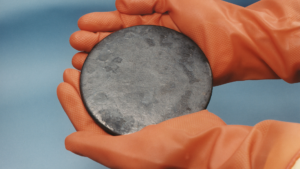
At the center of the week’s activity was the announcement of an estimated 110 million tonnes of ore at Jabal Sayid in the Madinah region, where geological studies indicated high concentrations of rare earth elements, particularly heavy rare earths, alongside promising uranium concentrations.
The Kingdom also moved forward with its mining cooperation with Kazakhstan, while Ma’aden highlighted the scale of aluminium demand expected to emerge from Saudi Arabia’s expanding infrastructure and industrial pipeline.
Together, these developments reflect how the Saudi mining sector is gradually moving beyond exploration alone, with greater focus now being placed on strategic minerals, processing, industrial demand and international partnerships.
Jabal Sayid Brings Rare Earths Further Into Focus
One of the most significant announcements of the week came on 14 September, when Energy Minister Prince Abdulaziz bin Salman revealed the results of exploration and geological studies at the Jabal Sayid project in the Madinah region.
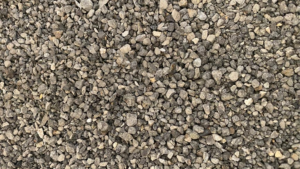
The studies identified an estimated 110 million tonnes of ore containing high concentrations of rare earth elements, particularly heavy rare earths, as well as promising concentrations of uranium.
The announcement was made during the International Atomic Energy Agency General Conference in Vienna.
It is important to note that the 110-million-tonne figure refers to the estimated volume of ore, not the volume of rare earth elements or uranium contained within it.
At this stage, publicly available information does not yet provide enough detail on grades, recovery rates or economic viability to determine the commercial potential of the resource.
Still, the announcement is significant because it adds another layer to Saudi Arabia’s growing critical minerals story.
Heavy rare earth elements are becoming increasingly important to global industries, with applications across advanced manufacturing, electronics, energy technologies and strategic supply chains.
For Saudi Arabia, the findings at Jabal Sayid could further strengthen the link between mineral exploration and the Kingdom’s broader ambitions to build new industrial capabilities around strategic resources.
Saudi Arabia Deepens Mineral Cooperation With Kazakhstan
Saudi Arabia also advanced its international mining agenda during the week.
On 15 September, the Cabinet approved a memorandum of understanding between the Saudi Ministry of Industry and Mineral Resources and Kazakhstan’s Ministry of Industry and Construction in the field of mineral resources.
The agreement had originally been signed during Minister of Industry and Mineral Resources Bandar Alkhorayef’s visit to Kazakhstan in June.
It covers cooperation across mineral exploration, investment, innovation, technology and knowledge exchange, as well as value-chain development and stronger links between companies from both countries.
The Cabinet approval marks a further formal step in a partnership that has been developing throughout 2026.
Kazakhstan has significant mineral resources and long-standing mining experience, while Saudi Arabia is looking to expand both its domestic mining sector and its international partnerships around critical minerals.
Recent discussions between the two sides have also focused on opportunities in exploration, extraction, mineral processing and critical minerals.
For the Kingdom, partnerships of this kind could support more than access to resources. They also offer opportunities for technology transfer, knowledge exchange and the development of more advanced mineral value chains.
Aluminium Demand Could Reach 1.8 Million Tonnes by 2030
Another major theme this week came from the downstream side of the sector.
Ahmad Al-Alshaikh, Executive Vice President of Ma’aden’s Aluminium Business Unit, said Saudi Arabia’s aluminium demand could rise to between 1.6 million and 1.8 million tonnes annually by 2030, compared with around 1 million tonnes today.
Demand could potentially double over the next five to seven years, driven largely by continued investment in infrastructure, construction and industrial development.
Projects related to the 2034 FIFA World Cup, including the planned development of 15 stadiums, are expected to contribute to that growth.
Ma’aden currently produces around 780,000 tonnes of primary aluminium annually, with approximately 85% of its output sold within the Saudi market.
The figures are important because they highlight how the Kingdom’s mining ambitions are increasingly being supported by domestic demand.
Saudi Arabia is not only looking to expand production. It is also creating a larger internal market for metals as construction, manufacturing and infrastructure spending continues.
This could open further opportunities across aluminium processing, fabrication and higher-value manufacturing.
Al-Ma’mala Excavations Shed Light on Saudi Mining Heritage
Saudi Arabia’s mining history also featured in the week’s developments.
The Heritage Commission completed the fourth season of archaeological excavations at the Al-Ma’mala site in Al-Baha, where evidence points to historical mining and mineral-processing activity.
The site is believed to have been used for the extraction and processing of ores including gold, silver and copper.
While the excavation is not linked to present-day commercial mining, it provides useful historical context.
Mining has taken place across parts of the Arabian Shield for centuries, and sites such as Al-Ma’mala demonstrate the long relationship between the region’s geology and mineral activity.
Today, that history is being revisited through modern exploration programs, geological data and advanced mining technologies.
Regional Risk Weighs on Mining Equities
Regional geopolitical tensions also had an impact on Saudi financial markets during the week.
On 13 September, the Saudi benchmark equity index declined as markets reacted to attacks affecting energy infrastructure and regional shipping security.
Ma’aden shares fell 3.2% during the session, alongside broader declines across major Saudi-listed companies.
The move did not reflect a specific change in Ma’aden’s mining operations, but it highlighted how regional security concerns can influence investor sentiment toward mining and other large industrial companies.
Weekly Perspective
This week’s developments point to several trends that are increasingly shaping Saudi Arabia’s mining sector.
The first is the growing importance of strategic and critical minerals. The Jabal Sayid announcement places rare earth elements and uranium-bearing mineralization more firmly within Saudi Arabia’s exploration agenda.
The second is the continued expansion of international mining partnerships. The Saudi-Kazakh agreement reflects the Kingdom’s wider approach of building relationships that can support exploration, technology transfer, investment and processing.
The third is the growing role of domestic industrial demand. Ma’aden’s aluminium outlook shows how major infrastructure projects could create stronger internal demand for Saudi-produced metals.
What is becoming increasingly clear is that the Kingdom’s mining strategy is no longer centered on resource discovery alone.
The next phase is about connecting geology with investment, processing, industrial demand and deeper value creation inside Saudi Arabia.
As exploration expands and major infrastructure projects move forward, the key challenge will be turning mineral potential into commercially viable projects and stronger Saudi-based value chains.