By Mohammad Kamalaldeen & Farhaa Abdelhaq
Saudi Arabia’s Public Investment Fund (PIF) 2026-2030 strategy, approved by Crown Prince Mohammed bin Salman, structures investments into three portfolios, Vision, Strategic, and Financial, with the Vision Portfolio emphasizing 6 integrated economic ecosystems: tourism, travel, and entertainment; real estate and urban development; advanced industries and innovation; industry and logistics services; clean and renewable energy and water infrastructure; and NEOM. While mining serves as one of the strategic assets that is foundational “connective tissue” across all six by supplying critical raw materials for economic diversification, global competitiveness, and Vision 2030 goals like non-oil GDP growth.
As announced earlier, Saudi Arabia plans to nearly double investment in its mining sector by 2030, increasing from approximately SAR 45 billion ($12 billion) in 2024 to nearly SAR 92 billion ($24.5 billion), driven by its National Investment Strategy. The timing is not a coincidence but a strategic approach to build and manage ‘strategic assets’ to realize their full potential. The strategy treats mining not as a legacy industry but as a high-tech frontier.
According to Saudi Arabia’s Public Investment Fund governor, Yasir Al-Rumayyan, domestic investments should account for 80% of total investments, and international investments should account for 20%.
The sovereign wealth fund’s governor said it will focus on six key themes under a new five-year strategy.
The 6 ecosystems (vision portfolio) and their relations to the mining sector (strategic portfolio)
Tourism, Travel, and Entertainment
To build infrastructure for hotels, stadiums, and entertainment venues that fuel tourism hubs, mining supplies construction minerals, such as limestone and aggregates. S&P Global notes that these infrastructure investments stimulate domestic demand and support tourism job targets exceeding 200,000 roles.
Real estate and urban development
Mining provides essential inputs like iron ore for steel, gypsum, and cement raw materials that drive high-rise developments and roads, enhancing livability across Saudi cities.
Advanced Industries and Innovation
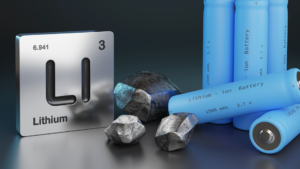
Rare earths, lithium, and copper, which are essential for manufacturing semiconductors, AI hardware, and batteries, align directly with PIF’s focus on data, AI, and innovation. Through Ma’aden’s expansions, every ton of ore from the Arabian Shield feeds Saudi factories with strong R&D synergies. Domestic aluminum and magnesium (via Ma’aden) are essential for the Ceer and Lucid EV plants. Local production pipeline, acquisition, and JV deals ensure the production of high-performance alloys ensures that Saudi-made cars and electronics aren’t stalled by global supply chain trends or shocks. According to S&P global, PIF manages “National Champions” through its Strategic Portfolio, which includes Ma’aden, the company’s flagship mining operations with a massive 100km gold strike and phosphate and aluminum expansions for export. In order to secure critical minerals and shield Saudi Arabia from supply chain shocks, PIF and Ma’aden’s joint venture Manara Minerals acquired international stakes (e.g., Vale Base Metals).
Industry and logistics services
Raw materials like phosphate and bauxite power industrial operations, while the wider logistics and market ecosystem helps move Saudi Arabia’s untapped mineral resources into processing and export. Together, this strengthens supply chains and supports the Kingdom’s industrial sovereignty.
Clean and Renewable Energy and Water Infrastructure
Lithium, cobalt, graphite, and other critical minerals extracted through mining are vital for solar panels, wind turbines, batteries, and desalination technologies. This enables PIF’s renewable energy expansion and national water security. Manara Minerals secures global supplies to complement domestic output.
NEOM
Despite a recalibrated scope, NEOM’s physical realization remains one of the world’s most mineral-intensive projects. To insulate this vision from global supply chain fragilities, PIF has strategically integrated the upstream mining sector with downstream construction needs. By leveraging the acquisition of Hadeed for structural steel and investing heavily in industrial mineral processing, the Kingdom’s aim is to create a resilient, localized supply chain. This ensures that the specialized glass, high-performance alloys, and critical metals required for NEOM’s energy grids and data centers are sourced and forged domestically, transforming NEOM from a mere consumer into a catalyst for Saudi Arabia’s industrial sovereignty.
Prioritizing Mining for PIF Success
In an era of global supply chain vulnerabilities and escalating demand for critical minerals, sustained investment in Saudi Arabia’s mining sector is not optional; it’s imperative to realize the PIF 2026-2030 strategy’s ambitious goals across all six ecosystems. Through “Mineral Diplomacy,” PIF secures a seat at the global table for copper and lithium, ensuring Saudi’s industrial machine stays fueled while Ma’aden creates international champions. Where oil will continue to power Saudi 2030 vision , critical minerals such as copper, lithium, phosphate, bauxite, and rare earths power the Fourth Industrial Revolution, the clean-energy transition, and the manufacturing systems that underpin Vision 2030.
The India-Middle East-Europe Economic Corridor is one of the most important strategic dimensions of Saudi Arabia. Besides being a producer, mining can also strengthen the Kingdom’s role as a processing and re-export hub for minerals traveling between Asia, the Middle East, Europe, and possibly Africa and Central Asia. That gives Saudi Arabia a much larger strategic role in the global minerals supply chain, especially as countries seek secure, diversified, and geopolitically stable sourcing routes.
Remote regions also benefit from mining. Western and northern regions of the Arabian Shield hold a large portion of the Kingdom’s mineral wealth. As Saudi Arabia invests in mining, it generates skilled employment, supports local businesses, and helps balance regional development. Mining is not just about revenue generation; it is also about spatial development and social inclusion.
Sustainability is also a key component. Saudi Arabia is increasingly committed to responsible or green mining practices. If mines and processing plants are powered by renewable energy, an area where PIF is also heavily focusing, then Saudi mineral exports can gain a green competitive advantage in a world where carbon taxes, emissions rules, and environmental standards are becoming more important. This makes mining not only economically strategic but also environmentally relevant in a future where low-carbon supply chains will matter more and more.
This is why mining now goes beyond extraction. This is now a key component of Saudi Arabia’s industrial strategy, integrating natural resources, logistics, processing, exports, and downstream manufacturing. Hence, mining is not simply an industry that produces commodities; it is an enabler of industrial sovereignty, regional development, and long-term economic stability.
Taken together, these dynamics show why mining deserves continued strategic attention within Vision 2030 and PIF’s 2026–2030 strategy. It supports industrial growth, strengthens supply chain security, enables regional development, advances sustainability, and accelerates innovation. More importantly, it helps ensure that the six priority ecosystems in PIF’s strategy are not built in isolation but are supported by a resilient domestic resource base capable of sustaining long-term national transformation. Without the current unwavering attention to unlocking untapped reserves, Saudi Arabia could risk import dependencies that could derail tourism infrastructure, stall advanced industries, and hobble NEOM’s ambitions. Continued focus guarantees resilient supply chains, jobs, and a GDP boost by 2030.