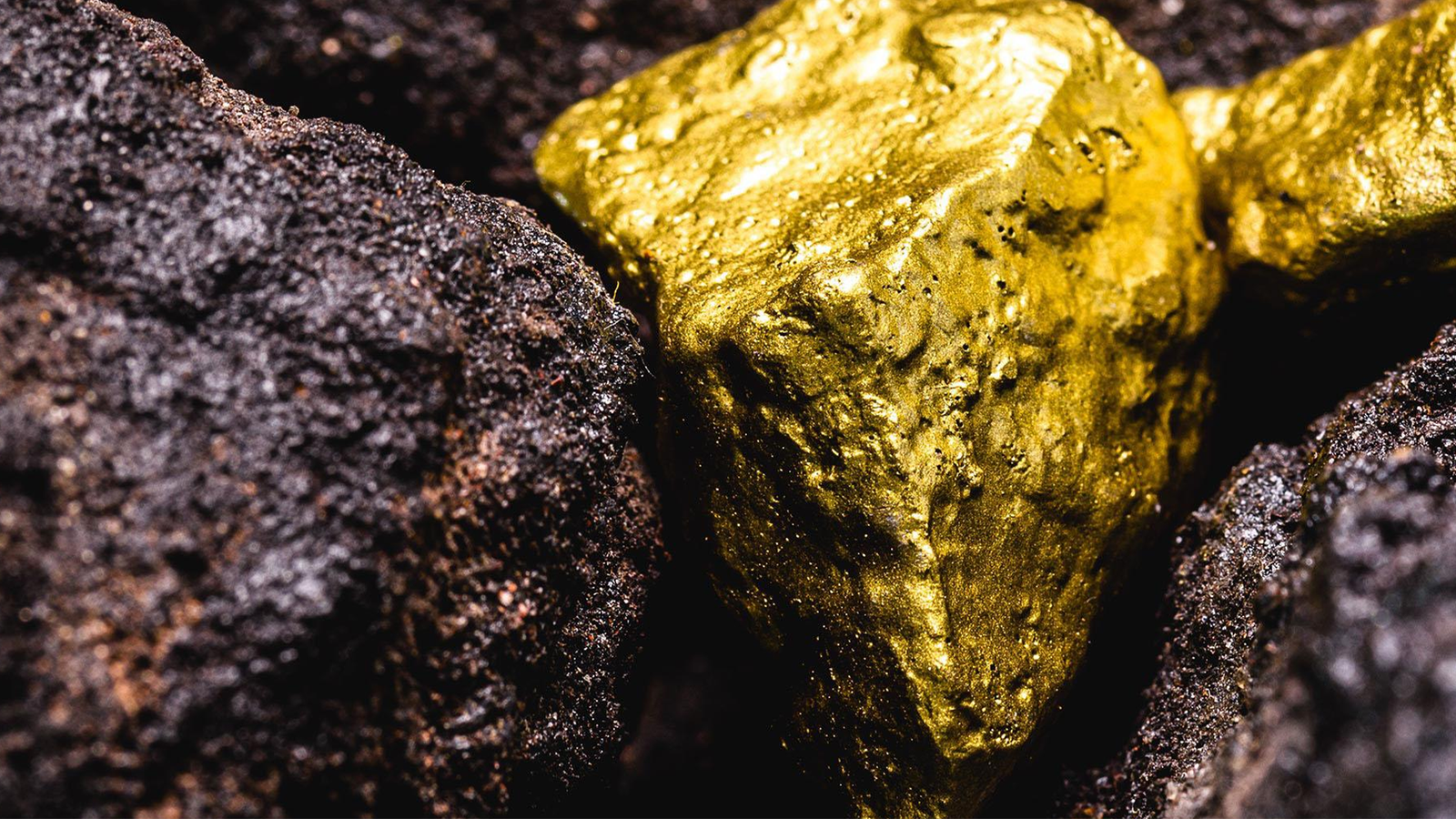
For centuries, gold mining has been romanticized as a quest driven by luck and intuition. But in the modern era, where the easy-to-find surface deposits are long gone, relying on luck is a multi-million-dollar gamble. Today, successful gold exploration is a precise science, and its most powerful tool is structural geology.
By analyzing the crustal fractures, faults, and folds that shape our planet, geologists are no longer guessing where gold is-they are reading the roadmap the Earth left behind.
In this article, we highlight how fault and fracture analysis guides exploratory drilling, drastically minimizing economic waste and reshaping the economics of the mining industry.
Structural Geology and the High Cost of Blind Drilling in Gold Exploration
In gold exploration, the core challenge has always been predicting where the gold actually hides. Gold rarely sits in massive, easily predictable blocks. Instead, it is highly localized, often concentrated in narrow, erratic zones known as “shoots.”
Historically, exploration has relied heavily on geochemistry (soil sampling) and basic geophysics. While these methods can indicate that gold is present in a general area, they lack the precision to show exactly how the gold is distributed underground.
The Problem: Economic and Environmental Waste
Without a deep understanding of the structural plumbing system of a deposit, mining companies fall into the trap of “blind drilling.” This leads to:
. Wasted Capital: A single exploratory drill hole can cost tens of thousands of dollars. Drilling in the wrong direction yields “barren core” (devoid of minerals), quickly draining exploration budgets.
. Environmental Footprint: Unnecessary drilling requires more land clearing, higher fuel consumption, and increased site disturbance.
. Inaccurate Resource Modeling: Missing the true orientation of a gold vein can lead to overestimating or underestimating a mine’s value, halting projects before they even begin.
To bridge this gap, the industry required a shift from merely finding surface anomalies to understanding the physical mechanisms that trapped the gold in the first place.
The Solution: Structural Geology as the Ultimate Subsurface Roadmap
This is where the core science of structural geology steps in. Gold deposits, particularly orogenic and epithermal types, are fundamentally tectonic products. They are born from ancient earthquakes and mountain-building events.
-
Faults and Fractures: The Earth’s Plumbing System
Deep within the Earth’s crust, hot, mineral-rich fluids under immense pressure seek a way out. Solid rock is impermeable, so these fluids follow the path of least resistance: faults and fractures.
As tectonic forces pull or push the crust, rocks break. This fracturing creates sudden pressure drops, acting like a massive cosmic vacuum. The gold-bearing fluids rush into these newly formed spaces, cool down, chemically react with the surrounding rock, and precipitate—leaving behind gold-bearing quartz veins.
-
Decoding the Stress Field
A structural geologist looks at a rock face the way a detective looks at a crime scene. By measuring the orientation (strike and dip) of faults, the spacing of fractures, and the direction of movement, geologists can reconstruct the “paleo-stress field”—the directional forces that cracked the rock millions of years ago.
– Understanding this stress field allows geologists to predict:
. Dilatant Zones: The specific bends or intersections in a fault where the rock pulls apart, creating the largest openings for gold fluids to accumulate.
. Fault Displacements: If a gold vein suddenly stops, structural analysis can determine whether the vein was cut and shifted to the left, right, up, or down by a younger fault, allowing drillers to find the “lost” segment.
-
Precision Targeting: Replacing Guesswork with Geometry
Instead of drilling a grid of random holes, structural geology enables oriented core drilling. By locking the exact orientation of the rock sample before it is pulled from the ground, geologists can map the 3D geometry of fractures.
This data is fed into advanced software to create predictive 3D structural models. Engineers can then aim drill bits to intersect the gold-rich structures at the perfect angle, maximizing the data gained from every single meter drilled.
Industry Impact: Driving Efficiency and Sustainability
The integration of advanced fault and fracture analysis is not just an academic victory; it is a commercial and environmental game-changer for the mining industry.
|
Structurally-Guided Exploration |
Traditional Exploration |
Metric |
| High (Targeting specific structural traps) | Low to Moderate (High uncertainty) | Drill Hit Success Rate |
| Optimized (Fewer, higher-impact holes) | High (Due to volume of barren holes) | Exploration Costs |
| Accelerated (Direct, targeted discovery) | Protracted (Years of trial and error) | Time to Discovery |
| Lowered footprint due to fewer drill pads | Higher surface and carbon footprint | Environmental Impact |
Turning Waste into Wealth
By minimizing the number of barren holes, mining companies significantly reduce their environmental impact—a crucial factor in securing the social license to operate in the modern ESG (Environmental, Social, and Governance) climate.
Furthermore, accurate structural modeling prevents unprofitable rock (gangue) from being extracted alongside the ore, streamlining processing plants and reducing tailings waste.
Future Opportunities: Advanced Computing and Virtual Geology
The future of structural geology in mining lies in the digital realm. Today, the industry is combining traditional field mapping with advanced software technologies:
. Automated Fracture Mapping: Utilizing drones equipped with LiDAR and photogrammetry to map inaccessible cliff faces and open-pit walls in seconds.
. Predictive Algorithms and Structure Detection: Integrating advanced statistical software to analyze satellite imagery and hyperspectral data to identify hidden fault networks buried beneath vegetation or soil.
. Virtual Reality (VR) Core Sheds: Allowing global teams of experts to collaborate in a virtual 3D space, examining structural data collected from across the globe in real-time.
Gold exploration is transitioning from an era of discovery by proximity and chance to an era of discovery by digital and analytical intelligence. Fault and fracture analysis stands at the center of this rapid evolution.
By understanding the structural architecture of the Earth, mining companies can look through solid rock, turn geological complexity into a competitive advantage, and locate the world’s next great gold deposits with unprecedented efficiency. In the modern mining landscape, the most valuable tool isn’t the biggest drill—it is the sharpest structural model
Read Also: Critical Minerals Economics: Bridging the Gap in Lithium and Rare Earth Element Extraction