You’re sitting in your office in Australia or Canada, reading about Saudi Arabia’s mineral wealth, now estimated at around $2.5 trillion, and asking a practical question: how can a foreign company actually enter this market?
For businesses considering mining investment opportunities in Saudi Arabia, the potential is significant, but entering the market requires following a clearly defined process. The journey begins within the Kingdom’s official digital mining ecosystem, moving from pre-qualification and geological opportunity assessment to competitive bidding for exploration licenses.
This article explains that process step by step, focusing on Saudi Arabia’s 2026 and 2027 mining bidding rounds and what foreign companies need to prepare before competing for a place in one of the world’s fastest-expanding mining markets.
Why Explore Mining Investment Opportunities in Saudi Arabia Now?
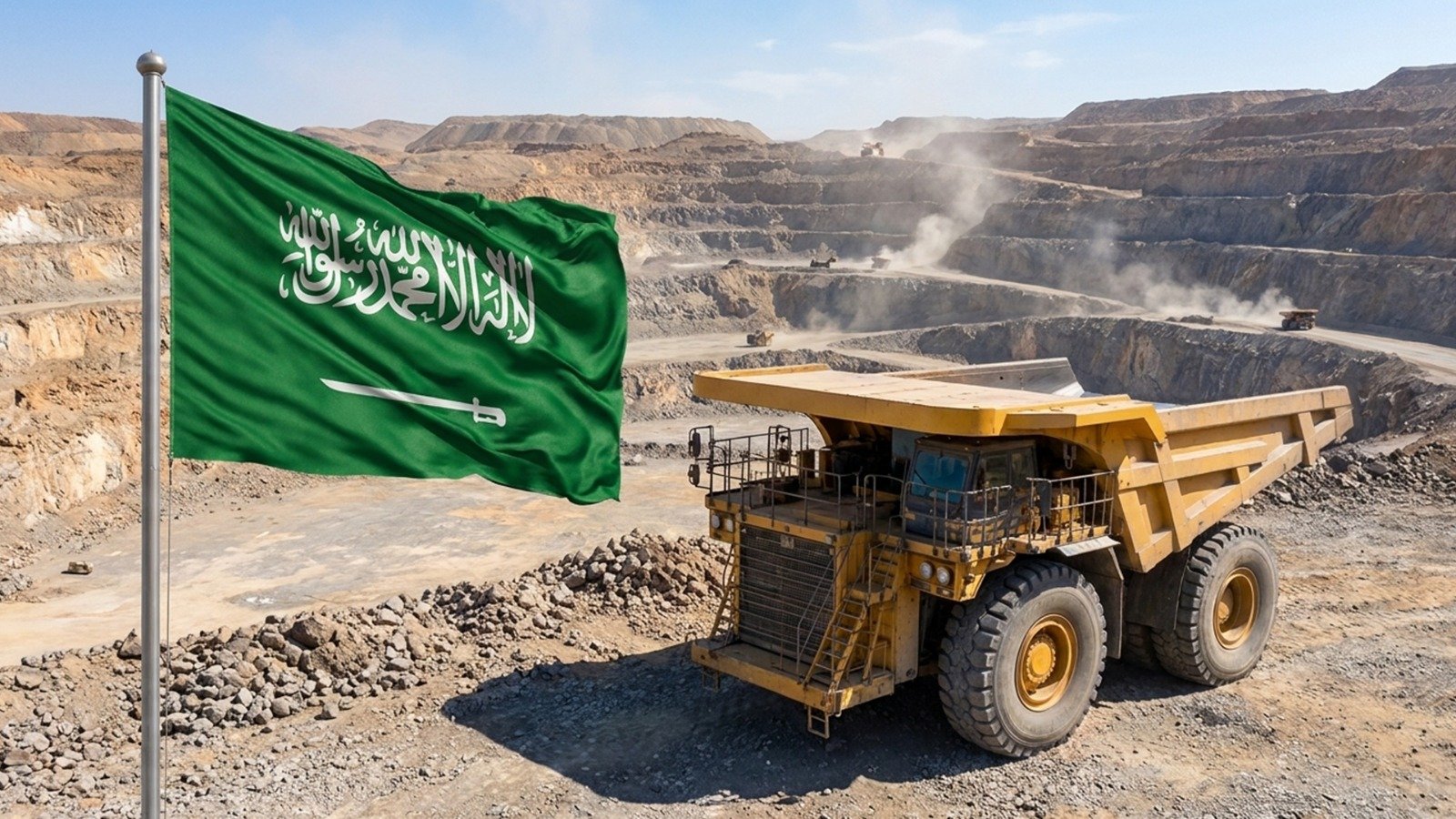
The short answer: the scale of the opportunity and the pace of execution. Saudi Minister of Industry and Mineral Resources Bandar Alkhorayef announced, during the International Mining Conference in Riyadh, the Kingdom’s intention to launch major exploration opportunities through competitive bidding rounds during 2026 and 2027 to unlock mineral wealth estimated at $2.5 trillion. This isn’t theoretical talk; the Kingdom has already awarded more than 33,000 square kilometers of exploration areas so far, with the ninth bidding round standing out as a key milestone, having granted 172 mining sites to 24 companies and a global consortium.
In other words, this market isn’t in a formative stage; it’s already accelerating, and companies entering now are doing so while vast stretches of the Arabian Shield remain fully unexplored.
Stage One: Pre-Qualification (PQQ)
Before considering any specific site, a foreign company must clear the digital pre-qualification stage, known as the PQQ. This isn’t a mere formality; it’s an actual gate through which the Ministry assesses an applicant’s technical and financial standing before allowing entry into competition for any site.
A concrete example: in May 2026, the Ministry of Industry and Mineral Resources announced exploration licenses covering 8 promising exploration sites totaling more than 1,878 square kilometers and later extended the pre-qualification application window to the end of July of the same year. Notably, these sites weren’t offered at random they are outputs of the Accelerated Exploration Initiative carried out in partnership with the Saudi Geological Survey, which included extensive fieldwork covering 6,447 surface samples, 8,825 exploration trenches, 26,229 well samples, and 22,767 meters of drilling. This means an applying company isn’t entering a “blind” area; it gains access to pre-existing geological data that substantially reduces the risk of initial exploration.
What Does a Company Need to Pass Pre-Qualification?
According to the official requirements on the Taadeen platform for reconnaissance and exploration licenses, a company must submit:
Proof of a specialized technical team, including geologists and mining experts with recognized experience, or a commitment to contract a qualified party to carry out exploration work.
A detailed, documented work program, outlining the annual work plan, financial commitments, and planned geological work phases.
Proof of financial capacity sufficient to fund the exploration phases.
Identification of the administrative region for the requested license is an important step, since each bidding round is typically tied to specific geographic areas pre-defined by the Ministry.
Stage Two: Registering on the Taadeen Platform
All of these procedures run through a single digital gateway: the Taadeen platform (taadeen.sa), the unified official channel for submitting and tracking mining license applications. One notable feature is that the platform doesn’t require any fee just to browse available geological data or explore existing opportunities, giving foreign companies room to conduct feasibility research before committing to a formal application.
After registering, a company can follow the mining competition plan for 2026-2027, which covers wide stretches of the Arabian Shield, including the Baha, Asir, Hail, Makkah, Madinah, Najran, Qassim, and Riyadh regions – reflecting the sheer breadth of exploration territory on offer to investors.
Stage Three: Understanding License Types Before Applying
One common mistake among companies new to the Saudi market is confusing the different license categories. The Saudi mining investment system classifies licenses into several categories, each suited to a different stage of work, from initial search and exploration through to full commercial exploitation:
1- Reconnaissance License – Grants the holder the right to carry out broad, preliminary surveys to assess feasibility. It’s typically the first step for companies studying the market without a major commitment.
2- Exploration License – The category most closely tied to competitive bidding rounds. It grants a company the right to conduct intensive prospecting for specified minerals at a given site through surface mining and geophysical surveys.
3- Mining (Exploitation) License The final commercial stage, allowing actual extraction of Class A and Class B minerals.
Understanding this progression matters, because the bidding rounds the Ministry has announced for 2026-2027 primarily target exploration licenses at sites that have already undergone preliminary survey work by the Saudi Geological Survey – making them comparatively lower-risk than applying for a reconnaissance license in an unstudied area.
Stage Four: Obligations After Winning a Bid
Winning a bidding round isn’t the end of the journey; it’s the real beginning. Exploration license holders are bound by several ongoing requirements, most notably:
- An environmental impact study, whether a preliminary report or a comprehensive assessment depending on the project’s scale.
- Compliance with localization (Nitaqat) programs, through hiring Saudi nationals in technical and administrative roles.
- Financial guarantees for site rehabilitation after mining operations conclude are a requirement that reflects the Kingdom’s push toward environmentally responsible mining practices.
- Registration with the Saudi Geological Survey, along with periodic reporting on production, reserves, and updated geological data
These obligations aren’t just red tape; they’re part of a clear message the Kingdom is sending to foreign investors: this is a regulated sector built for long-term partnership, not quick extraction and short-term profit.
Practical Tips for Foreign Companies Looking to Enter
- Start the PQQ stage early. Pre-qualification windows come with strict deadlines (as seen when the deadline for Round Five sites was extended to July 31), and missing them means missing the entire round.
- Invest in a local partnership or local geological talent. Since localization is a core requirement, having Saudi expertise on the team from day one speeds up approval and strengthens the competitive application.
- Make use of the free geological data on the platform. Before spending on costly feasibility studies, review the results of the Accelerated Exploration Initiative for the sites on offer to gauge preliminary feasibility at a lower cost.
- Prepare a clear financing plan for environmental rehabilitation. Many applications are rejected due to weak financial backing for long-term environmental obligations, not necessarily due to technical shortcomings.
Mining Investment Opportunities in Saudi Arabia: The Opportunity Ahead
The 2026–2027 competitive bidding rounds highlight some of the most significant mining investment opportunities in Saudi Arabia, offering foreign companies a clearly structured pathway into the sector. The process begins with digital pre-qualification, continues through registration on the Taadeen platform, and can ultimately lead to securing an exploration site supported by existing geological data that helps reduce early-stage exploration risk. For companies evaluating new global exploration markets, the Saudi Arabian Shield, with its vast, still underexplored territory and increasingly supportive regulatory environment, stands out as a compelling destination for mining investment over the coming years.
Read Also: Gossan Ore and Its Strategic Role in the Economic Feasibility of Mining in Saudi Arabia