This week, Saudi Arabia’s mining sector moved further into the global spotlight as the Kingdom used its participation at the St. Petersburg International Economic Forum 2026 to reinforce its ambition to become a central player in the future of critical minerals, rare earth elements, advanced exploration, and resilient global supply chains.
The main message from the week was clear: Saudi Arabia is no longer positioning mining as a future opportunity, but as an active strategic pillar within Vision 2030 and a key extension of its role in supporting global supply security.
Saudi Arabia Seeks a Pivotal Global Mining Role
Minister of Industry and Mineral Resources Bandar bin Ibrahim Alkhorayef said Saudi Arabia aims to play a pivotal role in the mining and minerals sector, similar to its historical role in supporting the stability of global energy supplies.
Speaking during a session on rare earth elements, strategic minerals, sovereignty, and international cooperation at SPIEF 2026, Alkhorayef emphasized that the Kingdom’s mining strategy is built on international partnerships, integrated value chains, infrastructure development, financing, technology, and human capability.
The minister also highlighted the Future Minerals Forum as a global platform designed to bring together governments, mining companies, financial institutions, academia, and technology providers to address sector challenges and build practical partnerships.
The latest edition of the forum attracted participation from 100 countries, confirming its growing role as one of the leading global platforms focused on minerals and mining.
No “OPEC Model” for Critical Minerals
One of the week’s most important statements came when Alkhorayef addressed the idea of creating an “OPEC-like” alliance for critical minerals.
He said that minerals cannot be treated in the same way as oil, because oil is a single globally traded commodity, while minerals include a wide range of products, markets, technologies, processing requirements, and supply chain structures.
This distinction is important. The challenge in critical minerals is not only about production volume or resource ownership. It also involves processing capacity, refining technologies, infrastructure, financing, logistics, and workforce development.
For Saudi Arabia, this means the future of mining will depend less on controlling supply and more on building cooperation across the full value chain.
Mining as the Third Pillar of Saudi Industry
Saudi Arabia continues to define mining as the third pillar of its national industry, after oil and petrochemicals.
Alkhorayef linked the sector directly to Vision 2030 and the Kingdom’s economic diversification plans, noting that Saudi Arabia has intensified geological survey and exploration activities over recent years.
These efforts helped raise the estimated value of the Kingdom’s mineral wealth to around USD 2.5 trillion, an increase of nearly 90% compared with estimates announced in 2018.
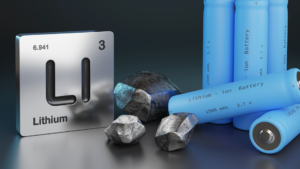
This figure reflects the scale of untapped opportunity across Saudi Arabia’s mineral landscape, particularly as global demand rises for copper, nickel, lithium, rare earth elements, phosphate, aluminium, and other minerals linked to energy transition, industrial development, and advanced technologies.
Stronger Saudi-Russian Cooperation in Mining
Saudi Arabia’s participation as guest of honor at SPIEF 2026 also carried a clear geopolitical and economic message.
The Kingdom’s industry and mining ecosystem participated through several key entities, including the Ministry of Industry and Mineral Resources, MODON, the Saudi Industrial Development Fund, the National Industrial Development Center, and the Saudi Export-Import Bank.
Their presence aimed to showcase Saudi Arabia’s industrial and mining investment opportunities, as well as the incentives and enablers available to global investors.
The forum also coincided with the 100th anniversary of diplomatic relations between Saudi Arabia and Russia, adding further importance to discussions around cooperation in strategic sectors, including mining, advanced technologies, machinery, equipment, and chemical industries.
Alkhorayef specifically pointed to the importance of expanding Saudi-Russian cooperation in rare earth elements and critical minerals, with a focus on building more flexible and sustainable global supply chains.
The Supply Gap in Africa, the Middle East, and Central Asia
Another key theme this week was the imbalance between mineral resources and actual global supply.
Alkhorayef noted that Africa, the Middle East, and Central Asia hold around 33% of global mining reserves, yet contribute only about 6% of global supply.
This gap reflects a major opportunity, but also a major challenge.
The issue is not simply the presence of mineral resources. Unlocking these resources requires long-term investment in infrastructure, geological data, processing capacity, financing, logistics, technology, and skilled talent.
For Saudi Arabia, this regional gap supports the Kingdom’s broader positioning as a connector between resource-rich regions and global demand centers.
Advanced Exploration: Saudi Arabia Deploys Space-Connected Mining Technology
This week also highlighted the growing role of advanced technology in Saudi Arabia’s exploration ambitions.
Flavia Tata Nardini, CEO and co-founder of Fleet Space Technologies, said Saudi Arabia is deploying one of the world’s largest mining exploration programs using satellite technology, real-time geophysical systems, artificial intelligence, and automated geological data processing.
Fleet Space has a long-term multimillion-dollar agreement with Ma’aden to map large areas of Saudi territory and accelerate the identification of potential mineral deposits.
The project uses satellite-connected seismic sensors and Fleet Space’s ExoSphere platform to process 3D seismic data and identify deep geological structures associated with mineralization.
This approach is especially important because future mineral discoveries are becoming deeper, more complex, and harder to detect using traditional exploration methods alone.
By combining seismic geophysics, satellite connectivity, cloud processing, and AI, mining companies can shorten exploration timelines and make decisions in days instead of months or years.
Why This Matters
The week’s developments show that Saudi Arabia’s mining strategy is moving across four connected tracks:
- Building international partnerships in critical minerals and rare earth elements.
- Developing domestic geological exploration and mineral processing capabilities.
- Positioning mining as a core pillar of economic diversification under Vision 2030.
- Using advanced technologies to accelerate mineral discovery and reduce exploration risk.
Saudi Arabia’s mining ambitions are not limited to resource extraction. The Kingdom is seeking to build an integrated mining ecosystem that includes exploration, processing, refining, industrial applications, export growth, and global supply chain partnerships.
Outlook
The key takeaway from this week is that Saudi Arabia is presenting itself as more than a resource holder.
It is positioning itself as a mining hub, a technology adopter, a supply chain partner, and a bridge between mineral-rich regions and global industrial demand.
As competition for critical minerals intensifies, Saudi Arabia’s ability to combine capital, infrastructure, geological potential, international partnerships, and advanced exploration technologies could give the Kingdom a stronger role in shaping the next phase of global mining.